 Noco tech Motor
Noco tech Motor
Noco tech Motor
Choosing the 2026 best Chain Drive depends on more than purchase price or advertised load capacity. Global buyers must match each chain type with speed, torque, operating temperature, maintenance access, and local supply conditions.
Roller chains remain practical for factory conveyors, agricultural equipment, and general power transmission. Silent chains can reduce vibration and operating noise. Leaf chains suit lifting applications, while stainless steel chains perform better in washdown areas and corrosive environments. Double-pitch chains may lower costs for slower conveying systems, but they are not ideal for every duty cycle.
Small details matter. A misaligned sprocket can create uneven wear within weeks. Poor lubrication can turn polished rollers into noisy, overheated components. Dust, moisture, and frequent starts can change the selection completely.
Richard G. Budynas, co-author of Shigley’s Mechanical Engineering Design, states, “Design is an iterative process.” That principle is especially relevant when comparing Chain Drive options across global markets. A technically suitable chain may still fail commercially because replacement parts are unavailable, documentation is unclear, or installers lack training.
There is no universal winner. Not even close.
This guide examines major Chain Drive types, practical selection factors, performance limitations, and purchasing risks for 2026. It considers real operating conditions rather than catalog numbers alone. Some recommendations may need revision after field testing, because laboratory ratings cannot fully predict dust, shock loading, poor alignment, or inconsistent maintenance. Buyers should verify dimensions, standards, materials, and supplier support before placing large orders.
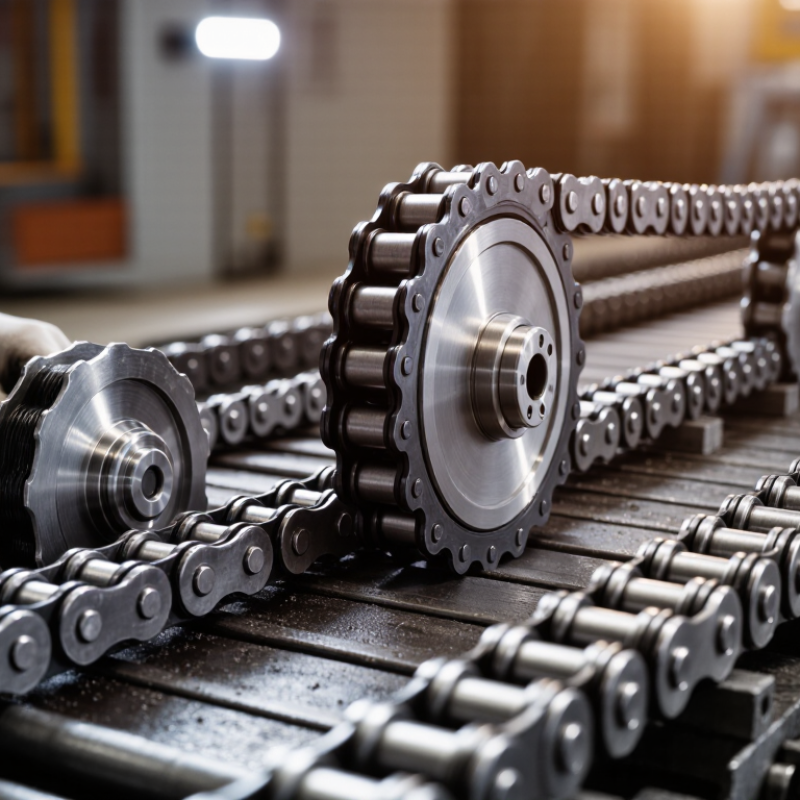
For global buyers, chain drive selection starts with torque, not catalog size. Torque is the twisting force required to move a load. A conveyor carrying wet cartons needs more torque than an unloaded test machine. I check starting torque, shock loads, operating hours, and shaft speed before choosing a chain. The basic relationship is simple: power depends on torque and rotational speed. When speed rises, available torque often falls at the same power level. That trade-off is easy to miss. It matters.
A correctly aligned roller chain can typically deliver 95–98% efficiency. This range assumes suitable lubrication, proper tension, clean sprockets, and accurate installation. Small errors create large losses. A loose chain may slap against the guard, while excessive tension increases bearing loads. I inspect sprocket wear, measure center distance, and confirm lubrication during commissioning. Dusty factories may need more frequent maintenance than the design schedule suggests. Real installations are less tidy. That estimate is not perfect.
For high-speed drives, chain speed and vibration deserve careful review. For high-torque applications, engineers should verify allowable working load, fatigue strength, and starting conditions. Temperature also changes lubricant performance. A practical selection includes a service factor for overloads and uncertain operating conditions. Buyers should request dimensional standards, test data, and maintenance guidance from qualified suppliers. Clear documentation reduces compatibility problems across different markets.
| Chain Drive Type | Typical Operating Speed | Typical Efficiency | Torque and Load Capability | Common Applications | Main Advantages | Important Selection Considerations |
|---|---|---|---|---|---|---|
| ANSI Roller Chain (Simplex) |
Up to approximately 1,500 rpm at the smaller sprocket, depending on pitch and lubrication | 95–98% | Suitable for low-to-medium torque transmission. Torque is determined by chain size, sprocket diameter, allowable working load, and service factor. | Conveyors, pumps, mixers, agricultural machinery, packaging equipment, and general industrial drives | Widely available, economical, easy to replace, and suitable for many standard power-transmission systems | Use correct pitch, sprocket tooth count, center distance, lubrication method, and alignment. Smaller sprockets increase polygonal action and wear. |
| ANSI Roller Chain (Duplex or Triplex) |
Generally lower than simplex drives at the same pitch; commonly used below approximately 1,000–1,200 rpm | 95–98% | Higher power and torque capacity than simplex chain because multiple strands share the load. Load sharing depends on accurate alignment and strand matching. | Heavy conveyors, crushers, industrial machinery, material-handling systems, and high-load drives | Higher capacity without changing the basic chain pitch or sprocket diameter | Requires precisely aligned sprockets and a suitable multi-strand chain. Unequal strand loading can reduce service life. |
| Metric Roller Chain | Typically up to approximately 1,000–1,500 rpm, depending on pitch, load, and lubrication | 95–98% | Available across a broad range of tensile and working loads. Torque capacity must be checked against the applicable metric chain standard and manufacturer rating. | International machinery, food-processing equipment, textile machinery, conveyors, and imported industrial systems | Useful where metric dimensions, replacement compatibility, or international maintenance standards are required | Metric and inch-series chains are not automatically interchangeable. Verify pitch, roller diameter, inner width, and sprocket profile. |
| Double-Pitch Roller Chain | Usually below approximately 500–700 rpm for power transmission; higher speeds may be possible in light conveyor service | 96–98% in suitable low-speed applications | Moderate torque capability. The longer pitch reduces cost and weight but generally provides less compact power transmission than standard roller chain. | Long conveyors, light-duty conveying, agricultural equipment, and low-speed material handling | Longer conveyor spans, lower chain weight, and economical operation at low speeds | Not normally the first choice for compact, high-speed, or high-shock power transmission. Check attachment loads and allowable speed. |
| Silent Chain (Inverted-Tooth Chain) |
Often suitable for approximately 500–3,000 rpm, depending on pitch, width, tension, and lubrication | 97–99% | High power density and torque capacity with smoother load transfer than many roller-chain systems of similar size. | High-speed industrial drives, compressors, machine tools, printing equipment, and precision power transmission | Lower noise, reduced polygonal action, smooth engagement, and good high-speed performance | Usually costs more and requires matched sprockets, accurate alignment, controlled tension, and reliable lubrication. |
| Leaf Chain | Low-speed, intermittent motion; commonly below approximately 300 rpm | Not normally specified as a continuous power-transmission efficiency; approximately 95–98% may be achievable in suitable lifting mechanisms | Designed primarily for high tensile and lifting loads rather than continuous rotary power transmission. Torque suitability is limited by the lifting mechanism and sheave arrangement. | Forklift masts, hoists, counterweights, lifting platforms, and reciprocating mechanisms | High tensile strength, compact construction, and good performance in lifting applications | Do not select leaf chain solely by horsepower. Check lifting load, fatigue rating, sheave diameter, inspection interval, and safety requirements. |
| Conveyor Chain with Attachments | Commonly approximately 5–60 m/min; higher speeds depend on chain design and load | 94–98% | Selected mainly by pull force, working load, attachment loading, and conveyor geometry rather than shaft torque alone. | Assembly lines, pallet conveyors, food-processing lines, automotive production, and bulk material handling | Can carry products directly and accommodate flights, rollers, pins, and customized attachments | Evaluate product weight, accumulation, friction, incline angle, sprocket engagement, lubrication compatibility, and environmental contamination. |
| Corrosion-Resistant Roller Chain | Typically up to approximately 500–1,000 rpm, depending on material, coating, load, and lubrication | 94–97% | Usually lower allowable working load than an equivalent standard carbon-steel chain, especially for some stainless constructions. | Washdown equipment, food and beverage machinery, chemical-processing equipment, outdoor machinery, and humid environments | Improved resistance to moisture, chemicals, and surface corrosion | Confirm chemical compatibility, temperature range, magnetic requirements, galling risk, and reduced load rating before substitution. |
Torque reference: Torque (N·m) = 9,549 × Power (kW) ÷ Speed (rpm). For example, a 10 kW drive operating at 1,500 rpm produces approximately 63.7 N·m of shaft torque before applying service factors. Actual chain-drive efficiency depends on lubrication, alignment, speed, load, sprocket size, installation quality, and wear.
Start with power, shaft speed, duty cycle, and driven-machine inertia. Calculate design load, not motor power alone. Include startup torque and frequent stops. A smaller pitch runs smoothly but may handle less shock. A larger pitch carries more torque but needs extra space.
No. Fifteen metres per second is not a universal rating. Actual limits depend on pitch, lubrication, sprocket quality, tension, and chain mass. Smaller pitches often reduce vibration at high speed. Test the real machine conditions.
Include startup torque, sudden stops, temperature changes, uneven loading, and machine inertia. A service factor helps cover unpredictable operating conditions. Clean calculations can still miss field shocks. That happens.
It can support higher loads without selecting one extremely large chain. However, wider arrangements demand accurate sprocket alignment. Small alignment errors may increase wear and noise. More capacity does not remove maintenance needs.
Match the lubricant to joint temperature, speed, and surrounding dust. Drip, brush, or automatic systems may suit different machines. Too little lubricant wears pins and bushings quickly. Too much oil attracts abrasive dust. Real factories are messy.
Yes. Excessive tension increases bearing loads and may shorten component life. Keep slack controlled without making the chain rigid. Check tension after startup and during scheduled maintenance. Perfect settings may not survive actual operation.
Inspect chain elongation, roller damage, tooth wear, lubrication, and alignment. Look for polished edges or uneven tooth contact. These marks can reveal alignment problems. Strength is not always the issue.
Compare service life, downtime, lubrication needs, spare-part access, and replacement frequency. Consider corrosion protection and lubricant compatibility. Record relubrication intervals during site trials. I would also question attractive efficiency claims without testing evidence.
This guide explains how to choose the right Chain Drive for global industrial applications in 2026. It introduces the fundamentals of torque, speed, power transmission, and the typical 95–98% efficiency range. Buyers will learn the differences between roller, silent, leaf, and engineering chains, along with the importance of selecting products that align with ISO 606 and ASME B29.1 requirements. The guide also covers roller chain pitch, load capacity, alignment, and operating speeds up to 15 m/s.
For demanding conveying systems, the discussion focuses on tensile strength, wear resistance, maintenance needs, and expected service life. A practical global buyer matrix compares cost, lubrication requirements, applicable standards, and sustainability considerations. By balancing performance, operating conditions, total ownership costs, and environmental goals, purchasers can make more reliable chain selection decisions for diverse machinery and material-handling applications.
