 Noco tech Motor
Choosing a Torque Motor manufacturer is not just a price comparison. Buyers must match motor design to machine loads, speed range, accuracy, and operating conditions. A direct-drive motor may simplify a rotary table by removing gears, but it can also require careful thermal management and precise installation. Small details matter: continuous torque, peak torque duration, encoder resolution, cooling method, and available mounting dimensions.
This guide explores manufacturers serving global buyers in 2026, with attention to product capabilities, customization, technical support, and supply considerations. It also explains what to verify before requesting a quotation. Ask for torque-speed curves, duty-cycle data, and clear information about testing and warranty terms. Check whether the supplier can support your target market’s documentation and service needs; capabilities vary by company and location.
Fit comes first. Not reputation alone. A manufacturer suited to a packaging line may not suit a high-precision indexing system. Compare specifications against real operating requirements, and discuss unusual loads directly with the engineering team. Published data is useful, but it may not capture every installation condition. That is worth remembering. A careful shortlist can reduce costly surprises, though no article can replace application-specific review.
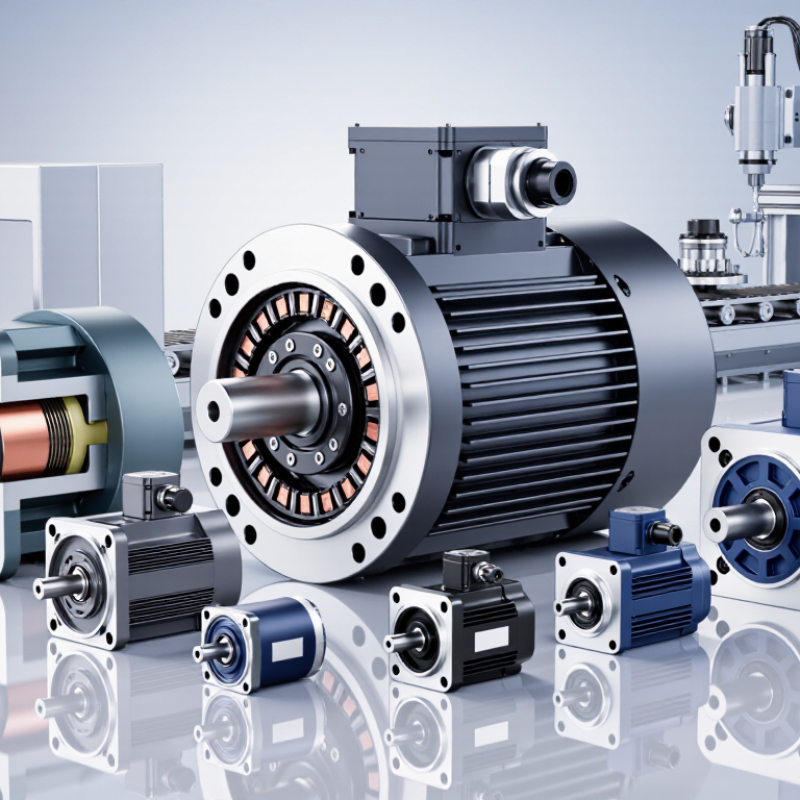
A torque motor is a direct-drive electric motor built to deliver strong rotational force at low speeds. Its rotor turns the load without a conventional gearbox, reducing backlash, vibration, and maintenance points. That matters when a rotary table must stop accurately beneath a cutting tool. In practice, a hollow center can leave room for cables, shafts, or fluid lines. No gearbox. Common applications include machine-tool tables, indexing platforms, robotic joints, printing equipment, and winding systems. Smooth, controlled motion can support accurate positioning and consistent product quality.
Choosing one requires more than checking a peak-torque figure. Engineers also assess continuous torque, speed range, load inertia, thermal limits, and encoder resolution. A motor may handle a brief torque spike but overheat during repeated cycles. Cooling, mounting stiffness, cable routing, and control tuning all affect real-world performance. For example, a heavy turntable that starts and stops every few seconds creates a different thermal load from one rotating steadily. Catalog ratings help, but they do not tell the whole story. Sizing can be untidy; real machine loads rarely behave like a clean spreadsheet.
A torque motor is a motor designed to produce high torque at low speed, often with direct drive and without a gearbox. Use this comparison to understand common motor formats, applications, and the specifications buyers should verify with manufacturers.
| Motor Format | How It Works | Common Applications | Key Benefits | Buyer Checks |
|---|---|---|---|---|
| Frameless direct-drive torque motor | Typically uses a permanent-magnet rotor and a stator installed directly into the machine structure. It is supplied without a conventional motor housing, shaft, or bearings. | Rotary tables, indexing axes, machine-tool spindles, semiconductor equipment, and precision positioning systems. | Compact integration, low mechanical backlash, and fewer transmission components when compared with a motor-and-gearbox arrangement. | Confirm continuous and peak torque, winding temperature limits, cooling requirements, rotor inertia, allowable air gap, and installation tolerances. |
| Housed direct-drive torque motor | Integrates the motor components into a housing, commonly with bearings and a defined mechanical interface. Some designs are supplied as complete rotary axes. | Rotary positioning stages, packaging machinery, inspection equipment, robot joints, and automated assembly systems. | A more integrated assembly can simplify mechanical design, mounting, and commissioning. | Check bearing loads, shaft or flange dimensions, encoder compatibility, protection rating, cable routing, and service access. |
| Large-diameter ring torque motor | Uses a ring-shaped motor geometry to apply torque around a large-diameter axis, often directly driving a rotating machine component. | Large rotary tables, radar and antenna positioning, telescope mounts, printing equipment, and heavy industrial turntables. | The ring format can provide a large through-bore and distribute drive around the axis without a conventional gearbox. | Verify outside and inside diameters, torque ripple, thermal management, rotor support, runout requirements, and load inertia. |
| Water-cooled torque motor | Uses a liquid cooling circuit, usually through channels in the stator or motor housing, to remove heat from the windings. | High-duty-cycle machine tools, industrial rotary axes, test rigs, and applications with limited space for heat dissipation. | Cooling can support higher continuous output in suitable designs, subject to the specified coolant conditions and motor limits. | Ask for the required coolant flow, inlet temperature, pressure drop, connection details, and continuous torque data under the stated cooling conditions. |
| Air-cooled torque motor | Dissipates heat through its surface and surrounding airflow, without a liquid cooling circuit. | Moderate-duty positioning axes, compact automation equipment, and installations where liquid cooling is impractical. | Avoids coolant plumbing and can simplify installation and maintenance. | Confirm ambient-temperature limits, required airflow or ventilation, mounting orientation, and thermal derating at the intended duty cycle. |
| Servo-driven torque motor system | Combines a torque motor with a compatible servo drive, feedback device, and motion-control configuration. | CNC axes, robotics, automated production lines, and applications requiring controlled speed, position, or torque. | Enables closed-loop motion control when the motor, drive, encoder, and application are correctly matched. | Check voltage and current compatibility, feedback protocol, commutation method, drive tuning support, braking needs, and safety functions. |
| Low-speed, high-torque motor with gearbox | Uses a motor and a reduction gearbox to increase output torque and reduce output speed. This is not a direct-drive torque motor, but may be an alternative for some applications. | Conveyors, mixers, packaging machines, and other applications where a geared drive meets the speed, precision, and maintenance requirements. | A gearbox can provide a practical torque and speed match and may reduce the motor size required for a given output. | Compare backlash, efficiency, maintenance, output speed, noise, gearbox life, and total system cost with a direct-drive solution. |
| Custom torque motor assembly | Designed around a specific machine envelope, load, cooling method, feedback system, or environmental requirement. | Specialized medical equipment, aerospace test systems, custom automation, and equipment with non-standard mechanical interfaces. | Can address requirements that are not met by a standard motor frame or catalog configuration. | Request design assumptions, prototype and validation plans, thermal and mechanical test data, production lead times, and change-control terms. |
Manufacturer selection tip: compare documented continuous torque at the intended speed and cooling condition, not peak torque alone. Also verify torque-speed curves, duty cycle, encoder and drive compatibility, mechanical tolerances, protection requirements, certifications applicable to the destination market, and after-sales support. Performance varies by design; request a datasheet for the exact configuration.
It is a direct-drive motor that produces strong rotational force at low speeds. Its rotor turns the load without a conventional gearbox.
They serve machine-tool tables, robotic joints, indexing platforms, printing equipment, and winding systems. A rotary table can stop beneath a cutting tool.
It can provide space for cables, shafts, or fluid lines. No gearbox.
Check continuous torque, speed range, load inertia, thermal limits, and encoder resolution. Peak torque alone can mislead.
Repeated starts and stops can heat a motor differently from steady rotation. A brief torque test may not reflect a long production shift.
Ask for test conditions, winding temperature, cooling details, torque ripple, encoder resolution, and low-speed stability. Small differences matter.
Review inspection processes, rotor balancing, end-of-line torque tests, and documented quality controls. Ask about capacity and lead times for your frame size.
Test it with the intended load, controller, and cooling setup. A pilot batch can reveal issues. Catalog ratings are not the whole story.
This article explains what a Torque Motor is, how its direct-drive design supports precise motion, and where it is commonly used, including industrial automation, machine tools, robotics, and other applications that require controlled rotation. It also outlines practical ways to evaluate manufacturers in 2026, such as reviewing engineering capabilities, product customization, quality controls, testing procedures, production capacity, and technical support.
For global buyers, the article compares manufacturers by considering their motor technologies, manufacturing processes, consistency, and ability to meet different performance requirements. It concludes with guidance for selecting a supplier based on the application’s torque and speed needs, operating environment, integration requirements, delivery expectations, and service availability. A careful evaluation of both product specifications and long-term support can help buyers choose a solution suited to their equipment and project goals.
