Noco tech Motor
Choosing a coreless brushless motor is not simply a matter of finding the smallest unit with the highest speed. The right choice depends on torque, operating voltage, thermal limits, control method, and available space. A motor that looks ideal on a specification sheet may run hot under repeated starts or struggle with a real load.
Dr. Fritz Faulhaber helped pioneer coreless motor design, and his engineering legacy highlights the value of matching a motor to its application. A practical selection rule for this guide is: “Choose for the motion you need, not the headline number.” This is an editorial summary, not a verified quotation from Faulhaber. That distinction matters; technical comparisons should not dress interpretation as a historical quote.
The seven motors featured here are assessed through useful, concrete criteria: size, torque, speed range, efficiency, heat behavior, and ease of integration. Picture a small actuator moving repeatedly inside a tight enclosure. A few grams of extra mass, a warm housing, or an unsuitable controller can change the outcome.
Specifications still need context. Manufacturers may report performance under different test conditions, and a listed peak value does not guarantee continuous operation. Not every model will suit every project. This comparison aims to make trade-offs clearer, while leaving room for a detail that deserves a second look: the best motor on paper may not be the best motor in your device.
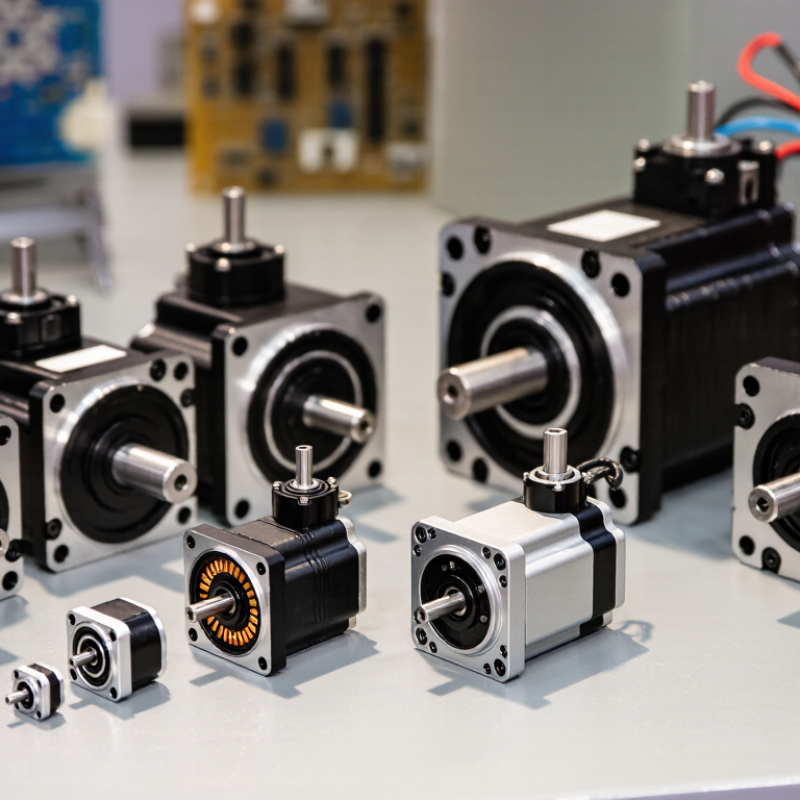
Coreless brushless motors use an ironless stator winding positioned within a permanent-magnet field. An electronic controller switches current through the coils, creating rotation without brushes rubbing against a commutator. With less rotor iron, these motors can have low inertia and little cogging, supporting quick speed changes and smooth motion. Small, but not trivial.
Heat remains a design constraint. The winding must shed heat through its supports and housing, and compact installations can restrict airflow. High current may therefore reduce service life or require a lower duty cycle. The trade-off is easy to underestimate: low mass does not automatically mean high continuous output. Winding temperature, controller timing, bearing quality, and load profile all matter.
The International Energy Agency’s 2011 report, Energy-Efficiency Policy Opportunities for Electric Motor-Driven Systems, estimates that motor-driven systems use about 45% of global electricity. The U.S. Department of Energy’s 2014 motor-systems sourcebook reports a 68% share of U.S. industrial electricity use. These figures describe motor systems broadly, not coreless units specifically. For selection, compare measured torque, speed, temperature rise, and efficiency at the intended operating point. Bench tests matter.
Comparing the seven best coreless brushless motors starts with the job they must perform. A small camera gimbal needs smooth low-speed control, while a compact pump may need steady torque under load. Check rated voltage, continuous current, speed, and torque together; peak figures alone can make a motor look stronger than it is. Small details matter.
Next, compare efficiency and heat under similar test conditions. A motor that draws less current at the same load may extend battery life, but winding temperature also matters during long runs. Look for clear thermal limits and test data, not just a headline efficiency number. I may be over-weighting heat here, but it is often the constraint hidden inside a tight enclosure. Low rotor inertia can support quick starts and stops, yet the controller must still provide suitable commutation and speed regulation.
Mechanical fit deserves equal attention. Measure the motor body, shaft diameter, mounting points, and available clearance before comparing performance. Check bearing type, allowable side load, and vibration information when the application uses belts or gears. Finally, assess documentation quality: useful specifications state measurement conditions and tolerances. If two datasheets use different test setups, their numbers may not be directly comparable. A brief bench test with the intended controller and load can reveal behavior that a table misses.
Coreless brushless motors combine a lightweight, ironless winding with electronic commutation. Low rotor inertia can support quick starts and precise speed changes. Heat remains a limit, especially in a sealed housing. The best fit depends on load, control electronics, and cooling—not size alone.
A miniature actuator can move a camera lens or optical shutter with fine, repeatable steps. A gimbal drive can make small corrections to stabilize a handheld camera. A compact blower can cool a sensor enclosure where space and vibration matter. A miniature pump can deliver controlled fluid flow in a portable instrument; check whether its materials suit the fluid. An autofocus drive benefits from low inertia, though backlash in the mechanism can still spoil precision.
A small spindle motor can spin a lightweight tool at high speed, but its bearings and heat rating deserve close attention. A robotic gripper motor can provide fast, responsive finger movement when paired with a suitable gearbox and encoder. That pairing is easy to underestimate. In practice, no category guarantees quiet operation or accuracy by itself; mounting, firmware, and load testing often change the result. A brief bench test may miss heating that appears during longer duty cycles.
Coreless brushless motors are used where low rotor inertia and compact size are valuable. These examples cover common application areas, not a ranked product list.
How to read the chart: The bars show the typical three-phase winding configuration of conventional brushless DC motors across these applications. Phase count is not a measure of motor quality or performance, and specific designs can vary.
Among seven leading coreless brushless motors, the best choice depends on the job, not a single speed figure. Lightweight models suit tiny aircraft and handheld mechanisms, where low mass matters more than peak torque. High-speed versions can spin small fans quickly, but may draw more current and heat up in a cramped housing. Balanced designs trade some top speed for smoother control and steadier output. Small differences matter.
Compare each motor’s rated voltage, speed constant, torque, and continuous current. A motor that looks powerful on paper may perform poorly if its controller cannot supply the required current. Check the shaft diameter and length against the gears or propeller hub; even a slight mismatch can cause vibration. Measure the available space, too. A few millimeters can decide whether the motor fits.
Compatibility goes beyond physical dimensions. Confirm that the driver supports brushless commutation and the motor’s sensor arrangement, if sensors are present. Match the power supply to the motor’s rated range, then leave room for cooling during sustained use. Test under the actual load, not just with the shaft spinning freely. That distinction is easy to miss. Published figures also vary by test setup, so treat close performance claims with some caution.
This comparison ranks common coreless/slotless brushless motor configurations by typical application strengths. Performance descriptions are qualitative: actual speed, torque, voltage, and dimensions depend on the specific motor winding and frame size.
| Rank | Motor Type | Typical Strength | Performance Characteristics | Best-Fit Applications | Compatibility Checks | Main Trade-Off |
|---|---|---|---|---|---|---|
| 1 | Compact slotless inrunner | Precise, smooth motion in a small package | Low cogging torque and low rotor inertia support smooth starts and rapid speed changes. An inrunner layout keeps the rotor inside the stator. | Medical instruments, compact pumps, precision actuators, and small robotic joints | Match the controller to the motor’s phase count, voltage, current, speed constant, and sensor arrangement. Check shaft and mounting dimensions. | Small frames generally have limited continuous torque and require attention to heat dissipation. |
| 2 | High-speed slotless inrunner | High rotational speed with smooth running | Low cogging and a compact rotor can suit high-speed operation. The allowable speed is limited by the particular rotor, bearings, and mechanical assembly. | Dental or laboratory equipment, miniature spindles, and high-speed blowers | Verify the motor’s rated and maximum mechanical speed, bearing limits, balancing requirements, and controller electrical-frequency capability. | High-speed operation can increase bearing wear, windage losses, and cooling demands. |
| 3 | Outer-rotor slotless BLDC | More torque leverage in a short, wide form | The rotating outer shell places motor mass farther from the axis, which can provide useful torque leverage. The larger rotor inertia may reduce acceleration response. | Direct-drive wheels, gimbals, compact fans, and low-speed mechanisms | Check outer-rotor clearance, rotor containment, mounting pattern, shaft arrangement, and whether the controller supports the motor’s sensor type. | Often wider and higher-inertia than an equivalent small inrunner; packaging and rotor protection matter. |
| 4 | Low-cogging precision slotless motor | Fine positioning and steady low-speed motion | Slotless construction avoids the strong tooth-related detent effect found in many slotted designs. Smoothness also depends on commutation, sensors, bearings, and control settings. | Optical systems, camera positioning, laboratory stages, and precision robotics | For accurate positioning, confirm encoder resolution, Hall-sensor or sensorless operation, controller current-loop capability, and feedback compatibility. | May require a higher-performance controller and careful tuning to achieve its full smoothness potential. |
| 5 | High-torque, larger-frame slotless motor | Higher continuous output in a larger envelope | A larger frame can provide more active material and surface area for heat transfer. Continuous output still depends on winding, cooling, and operating conditions. | Industrial actuators, robotic joints, and compact drive systems | Compare continuous and peak current ratings, thermal limits, mounting dimensions, shaft load limits, and the controller’s current capacity. | Typically heavier and larger; the slotless design does not remove the need for thermal management. |
| 6 | Low-voltage miniature slotless motor | Integration with compact battery-powered systems | Small slotless motors can offer low cogging and responsive control. Available torque and thermal capacity are constrained by the small size and the selected winding. | Portable instruments, miniature pumps, small mobile robots, and handheld mechanisms | Ensure the battery voltage suits the winding, the controller can deliver startup current, and the motor’s connector, shaft, and mounting fit the assembly. | Limited heat dissipation can restrict sustained load, especially in enclosed devices. |
| 7 | Sensor-equipped slotless BLDC motor | Reliable startup and controlled low-speed operation | Hall sensors or an encoder provide rotor-position feedback. Feedback can improve startup and low-speed control compared with sensorless operation, depending on the controller. | Automation equipment, robotics, positioning systems, and mechanisms with frequent starts | Match sensor supply voltage, signal type, connector pinout, pole-pair configuration, and controller feedback inputs. | Requires compatible wiring and controller inputs; sensor installation adds system complexity. |
Selection note: “Coreless” is often used informally for slotless brushless designs. Before choosing a motor, compare the manufacturer’s winding data, continuous and peak ratings, speed limits, thermal conditions, mechanical dimensions, and controller requirements for the exact configuration.
Choosing a coreless brushless motor starts with the job, not a headline speed rating. These motors can offer low rotor inertia and quick response, useful in compact pumps, handheld instruments, and small robotic joints. But performance depends on the full system. Check the required torque across the operating speed range, then compare the motor’s voltage, winding speed constant, dimensions, and continuous current with your controller and power source. A high no-load speed does not guarantee useful speed under load.
Heat is easy to underestimate. A motor tucked inside a small housing may cool poorly, even when its rated current looks adequate. Review continuous and peak ratings, duty cycle, and the manufacturer’s thermal limits. Also check shaft size, bearing arrangement, and mounting space; a mismatch can add vibration or wear. If the load changes quickly, consider rotor inertia and controller response together. I would not choose from a specification table alone. Real test conditions rarely match the table perfectly.
Tips: Measure the available space and shaft before ordering. Test the motor with the actual load, controller, and supply voltage. Keep notes on temperature and current after several minutes of use. Small details matter. A little uncertainty remains until you test it.
Its ironless winding sits inside a permanent-magnet field. An electronic controller switches current through the coils. No brushes rub against a commutator.
Their low rotor inertia can support rapid speed changes. They may also produce smooth motion with little cogging. Small, but not trivial.
No. Heat still limits continuous output. Compact housings can restrict airflow, and high current may shorten service life.
Compare required torque across the speed range with voltage, winding speed constant, dimensions, and continuous current. Check the shaft and mounting space, too.
No. Speed under load can differ substantially. Test the motor with the intended load, controller, and supply voltage.
Record current and temperature after several minutes of use. Review continuous and peak ratings, duty cycle, and thermal limits. Conditions vary.
Controller timing affects operation, while bearing quality can influence wear and vibration. A poor fit may cause problems. I might overlook that.
Their quick response can suit compact pumps, handheld instruments, and small robotic joints. Yet each application needs testing. Tables are imperfect.
This article explains how a Coreless Brushless Motor works, focusing on its lightweight, ironless rotor design and electronic commutation. It outlines the main factors to consider when comparing motors, including size, weight, speed, torque, efficiency, operating voltage, heat management, and control compatibility. These criteria help readers understand why a motor suited to one device may not perform as well in another.
The article also introduces seven notable motor types and the applications they may suit, then compares their performance and compatibility. Rather than treating one option as universally best, it shows how to match motor characteristics to an application’s space, power, speed, and control requirements. The result is a practical framework for choosing a motor that balances performance, efficiency, and ease of integration.