Noco tech Motor
When embarking on a new engineering project, choosing the right components is crucial. One option gaining traction is the DC Stepper Motor. These motors offer precise control and reliable performance, making them ideal for diverse applications. They are widely used in robotics, automation, and consumer electronics. The precision in position and speed control sets the DC Stepper Motor apart from traditional motors.
Many engineers appreciate the ability to safely manage multiple tasks simultaneously using this motor. The torque produced at low speeds can be extremely beneficial in certain situations. However, understanding the full potential requires a deep dive into the specifications and outputs. Are you maximizing the benefits of the DC Stepper Motor? Reflecting on your project's requirements may reveal unexpected insights.
As you consider components for your project, remember that not every motor will meet your needs. Some may favor speed or efficiency, while others demand accuracy. A DC Stepper Motor can be a perfect fit, but it’s essential to evaluate its drawbacks too. This reflection will enhance your decision-making process and ultimately lead to better outcomes.
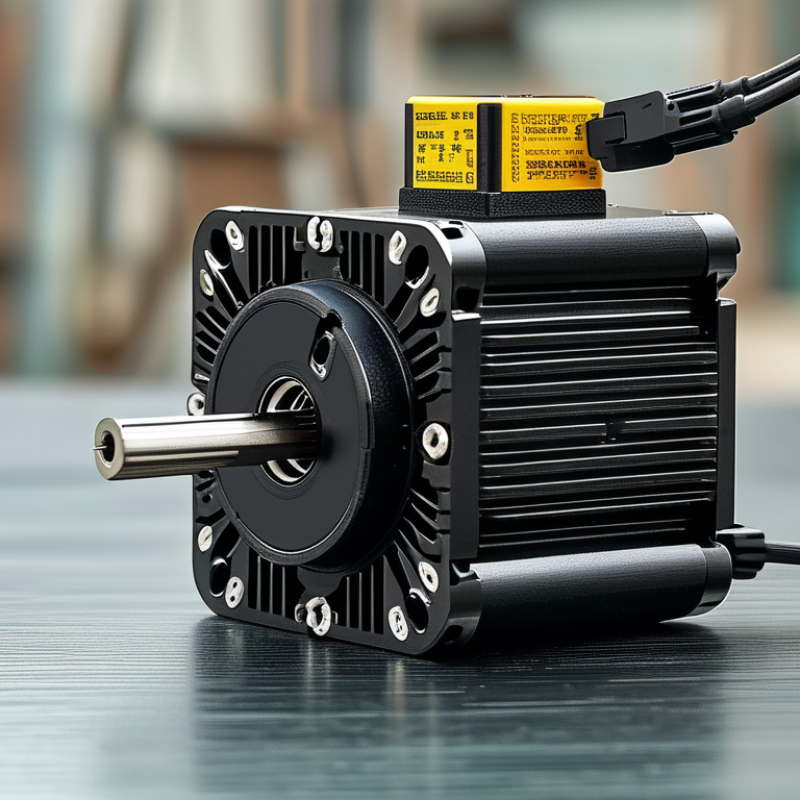
DC stepper motors offer distinct advantages for various applications. Their precise control is one significant benefit. According to a report from the International Electromechanical Society, DC stepper motors can achieve positioning accuracy of up to 1.8 degrees per step. This precision is crucial for robotics and CNC machinery, where even slight deviations can lead to significant errors.
Another advantage is their simple control scheme. Unlike other motors, DC stepper motors can be driven directly by microcontrollers without requiring complex feedback systems. This makes them ideal for low-cost designs. A study by the IEEE revealed that projects using DC stepper motors cut their control system costs by approximately 30%.
However, there are considerations. Stepper motors can lose steps under heavy loads, leading to inaccuracies. Additionally, they may require more power when driving at higher speeds. Users must balance these factors based on their project needs. Understanding these nuances helps in making informed choices for optimal performance.
When selecting a motor for your next project, DC stepper motors offer unique advantages. These motors provide precise control over movement and speed. This is crucial for applications like robotics and 3D printing. With the ability to rotate in discrete steps, they accurately position loads. This feature is particularly beneficial in automation systems where precision is paramount.
Key specifications include torque, resolution, and operating voltage. The torque rating determines how much load the motor can handle. Higher torque is essential for heavy applications. Resolution defines how accurately the motor can position itself. A higher resolution means finer control. Operating voltage influences performance and efficiency. It's important to match this with your power supply capabilities.
While DC stepper motors have benefits, they aren't devoid of challenges. They may overheat when driven at high currents for long durations. This can lead to performance dips. Additionally, the stepper motor can lose steps if overloaded. This makes regular monitoring essential. Understanding your project's specific requirements is vital. It helps in making an informed decision on whether a DC stepper motor is the right fit.
DC stepper motors are widely used in various industries. Their unique ability to control motion precisely makes them ideal for automation tasks. In robotics, these motors play a crucial role. They help the robots to position parts accurately. This accuracy is essential in tasks like 3D printing and CNC machining.
In industrial applications, DC stepper motors are common in conveyor systems. They provide reliable movement and can be easily controlled. This makes it easier to synchronize machines in a manufacturing line. Many assembly robots also rely on stepper motors for handling parts. They ensure that components are placed in the right spots, minimizing errors.
Despite their advantages, there are challenges. Heat generation can affect performance. Engineers must account for this in their designs. Sometimes they require more power than expected. This can lead to issues in energy efficiency. Understanding these factors is vital for successful implementation. Careful planning can mitigate potential drawbacks and enhance system performance.
DC stepper motors stand out for their cost-effectiveness and energy efficiency. They are widely used in various applications, from 3D printers to robotics. The initial investment in a DC stepper motor is generally lower than alternative motor types. This affordability can make them an attractive option for budget-conscious projects.
When it comes to energy efficiency, DC stepper motors consume less power while providing reliable performance. They can operate at lower voltage levels, which contributes to reduced energy costs in the long run. However, efficiency varies based on the application; improper sizing can lead to wasted energy. Users must carefully assess specific requirements to maximize efficiency.
Choosing a DC stepper motor might also present challenges. While they are efficient, they can generate heat, particularly during prolonged use. This heat can affect performance and longevity. Regular monitoring of temperature levels can mitigate potential issues. In project development, evaluating both advantages and potential drawbacks can ensure better outcomes.
The landscape of DC stepper motor technology is evolving rapidly. Recent studies indicate a market growth of approximately 6.1% annually. This rise reflects advancements in automation across various sectors. Innovations focus on efficiency, integrated electronics, and control systems that enhance precise movements. Engineers seek more reliable, compact solutions.
Emerging trends highlight the integration of IoT with stepper motors. According to a report from the International Society of Automation, smart features are enhancing control capabilities. Motors equipped with sensors provide real-time feedback, improving performance. Yet, the balance between complexity and usability needs attention. Not every design can afford these complexities.
One aspect often overlooked is heat management. With increased performance, motors can generate excessive heat. This can lead to failures if not managed correctly. Engineers must consider heat dissipation techniques in designs. Additionally, the long-term durability of components is still under scrutiny. While innovations push boundaries, they raise questions about longevity and reliability. Balancing innovation with practical application remains a challenge for future developments.
This chart illustrates recent innovations in DC stepper motor technology across key dimensions such as torque, step accuracy, operating voltage, and speed. These advancements reflect the growing capabilities and applications of DC stepper motors in various industries.
: DC stepper motors are widely used in robotics and industrial applications. They provide precise motion control for tasks.
They enable accurate positioning of parts, crucial for processes like 3D printing and CNC machining.
They ensure reliable movement and easy control, aiding in machine synchronization on manufacturing lines.
Issues include heat generation and potential power requirements exceeding expectations. Careful design is essential.
Their initial investment is typically lower than other motor types, making them budget-friendly for various projects.
Yes, they consume less power and can operate at lower voltages, reducing long-term energy costs.
Improper sizing can lead to wasted energy and reduced efficiency, impacting overall performance.
Regular monitoring is crucial to prevent overheating, which can affect performance and motor lifespan.
Users should evaluate specific requirements, heat generation, and potential drawbacks to achieve better outcomes.
Not necessarily. Each project requires careful assessment to ensure proper motor selection and application.
DC Stepper Motors are increasingly favored in various applications due to their distinct advantages over other motor types. One of the key benefits is their precision control, making them ideal for tasks that require exact positioning, such as in robotics and automation. Additionally, they exhibit favorable performance metrics including torque, speed stability, and reliability, which further enhances their appeal in industrial uses.
Moreover, DC Stepper Motors are recognized for their cost-effectiveness and energy efficiency, allowing companies to achieve significant savings in operational costs. Recent innovations have brought advancements in the technology of these motors, improving their performance capabilities and expanding their applications. As industries continue to evolve, DC Stepper Motors are poised to play a crucial role in driving efficiency and innovation across various sectors.
