Noco tech Motor Noco tech Motor

How to Choose the Best Permanent Magnet Motor for Your Needs?

Time:2026-08-19 Author:Charlotte
0%

Choosing the right Permanent Magnet Motor involves careful consideration of various factors. These motors have unique benefits. They are efficient, compact, and reliable. However, not every motor suits every application.

Begin by assessing your specific requirements. Consider factors such as power rating, size, and environmental conditions. The motor's intended use significantly influences its performance. A motor that works well in one scenario may fail in another.

Additionally, evaluating vendors is crucial. Trusted suppliers provide better support and quality assurance. Look for reviews and testimonials to gauge their credibility. It’s wise to reflect on your choices. Ensure your Permanent Magnet Motor meets long-term goals. Proper research can save time and money in the long run.
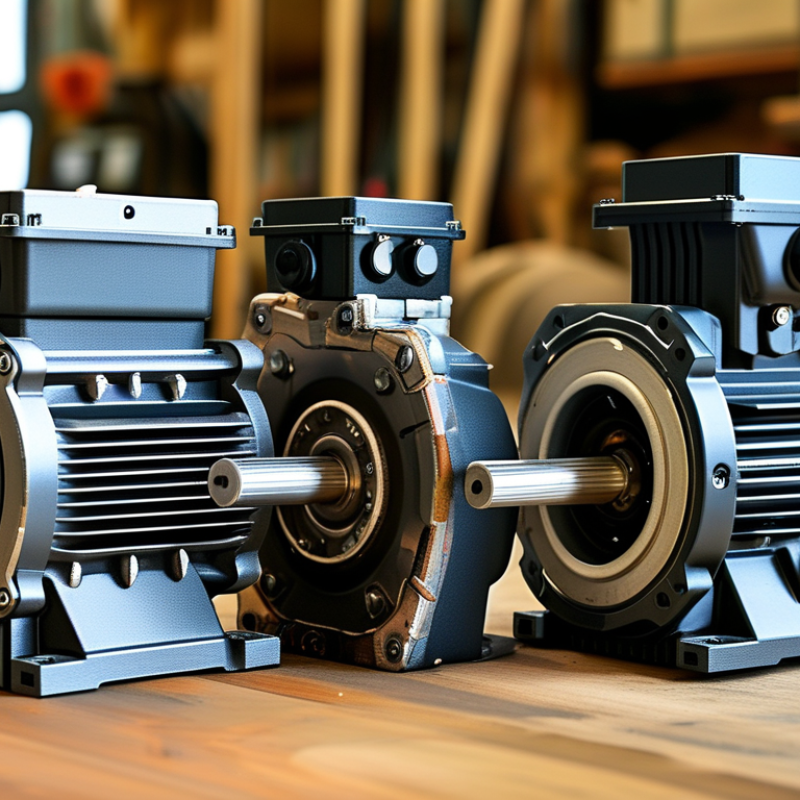
How to Choose the Best Permanent Magnet Motor for Your Needs?

Understanding the Basics of Permanent Magnet Motors

Permanent magnet motors are gaining popularity in various applications due to their efficiency and reliability. Understanding their basic components can greatly enhance your selection process. At their core, these motors utilize permanent magnets to create a magnetic field. This field interacts with the stator to produce motion. Unlike traditional motors, they do not require electrical input for their magnetic field, resulting in lower energy consumption.

When selecting a permanent magnet motor, consider its size and power requirements. Assess the specific demands of your application. For instance, the torque and speed ratings should align with your operational needs. Additionally, think about the environmental factors that may affect motor performance. High temperatures or humidity levels can impact efficiency and lifespan.

Tips: Always consult with a professional if you're unsure. They can provide valuable insights tailored to your needs. Consider testing multiple motors to compare performance before making a final decision. Sometimes, the most efficient motor isn’t the largest; it’s the one that best matches your specifications.

Comparison of Different Types of Permanent Magnet Motors

Identifying Your Specific Application Requirements

When selecting a permanent magnet motor, specific application requirements play a crucial role. Understanding factors like torque, speed, and operational environment can significantly impact the motor's performance. Data from the International Electrotechnical Commission indicates that motor efficiency can vary widely, with some applications seeing up to a 30% efficiency drop if the motor is not suited for its task.

Consider the operating conditions. Motors used in dusty or harsh environments will require different protection features. According to a report from the Electric Power Research Institute, approximately 20% of motor failures occur due to inadequate environmental protections. Choosing a motor without considering these factors can lead to unexpected downtime and increased maintenance costs.

Another factor is power supply compatibility. Electric motors need specific voltage levels and frequencies. Research by the IEEE shows that mismatched supply parameters can reduce a motor's lifespan by over 50%. It’s essential to identify both the operational voltage and the required control methods early in the selection process. Ignoring these details can result in significant performance issues down the line.

Evaluating Motor Specifications and Performance Criteria

When evaluating permanent magnet motors, specifications are crucial. Look for torque, speed, and efficiency. These figures help determine the best fit for your application. Industry data suggests that high-efficiency motors can reduce energy consumption by up to 25%. Consider power density as well. A motor with a higher power density typically provides better performance in limited spaces.

Pay attention to thermal performance too. Motors operate in various environments, and heat can affect efficiency and lifespan. Reports indicate that motors exceeding standard thermal ratings lead to a 30% reduction in lifespan. Inspect temperature ratings and cooling methods.

Noise levels are another essential criterion. Many applications require quiet operation. Studies have shown that vibrations can lead to mechanical failures over time. Examine the vibration specifications. While they are often overlooked, they can indicate the motor's reliability. An informed choice involves balancing these factors to meet your unique operational needs.

Comparing Different Types of Permanent Magnet Motors

When selecting a permanent magnet motor, understanding the different types is essential. There are various motors available, including brushless DC motors, stepper motors, and synchronous motors. Each type has unique benefits and applications, impacting overall efficiency. Brushless DC motors are popular for their high efficiency and low maintenance. They excel in applications requiring precise control. Synchronous motors are favored for their durability and consistent performance.

**Tips:** Assess your application’s torque needs. Consider the operating environment and load conditions. Factors like temperature and humidity can affect performance.

Stepper motors offer excellent positioning accuracy. They are commonly used in 3D printers and CNC machines. However, their performance can decrease at higher speeds. This makes understanding your specific use case crucial.

**Tips:** Always review technical specifications. Look for torque-speed curves to match performance needs. Sometimes, less power may be more efficient for long-term projects.

How to Choose the Best Permanent Magnet Motor for Your Needs? - Comparing Different Types of Permanent Magnet Motors

Type of Motor Torque (Nm) Max Speed (RPM) Efficiency (%) Cost (USD)
Radial Flux PM Motor 5.0 3000 90 500
Axial Flux PM Motor 3.5 4000 92 600
Interior Permanent Magnet Motor 10.0 4500 88 700
Surface Mounted PM Motor 4.5 3500 89 550
Switched Reluctance Motor (with PM) 2.0 3200 85 450

Considering Cost, Support, and Reliability in Your Decision

When selecting a permanent magnet motor, it's crucial to consider more than just performance. Cost is often a top concern. Higher efficiency motors may cost more upfront but can save money in the long run. Carefully calculate the total cost of ownership. This includes installation, maintenance, and energy savings. Sometimes, a cheaper upfront motor can lead to higher expenses later.

Support is another vital element. Ensure that the manufacturer provides adequate technical assistance. Quick access to customer support can save time and stress during installation and maintenance. Having reliable support can prevent costly downtime. If complications arise, strong support can help troubleshoot issues effectively.

Reliability cannot be overlooked. Assess the motor's design and materials used. Look for motors that have been tested under various conditions. This often indicates longevity. Warranty details can also reflect reliability. A longer warranty may signal confidence from the manufacturer regarding their product. It's worth reflecting on past experiences when assessing reliability. Would you be willing to invest in a motor that hasn't proven itself? Balancing these factors—cost, support, and reliability—will lead to a more informed decision.

FAQS

: What factors should I consider when selecting a permanent magnet motor?

: Consider torque, speed, and the operational environment. These greatly affect performance.

How does the operating environment impact motor performance?

Motors in harsh environments need better protection. Inadequate features lead to higher failure rates.

Why is power supply compatibility important?

Mismatched voltage and frequency can reduce motor lifespan by over 50%. It's crucial to assess these details early.

What specifications should I evaluate for permanent magnet motors?

Look for torque, speed, efficiency, and power density. These help determine the right match for your needs.

How can thermal performance affect a motor's lifespan?

Motors exceeding thermal ratings can suffer a 30% lifespan reduction. Inspect temperature ratings and cooling methods.

Why are noise levels and vibrations important to evaluate?

High noise or vibrations can lead to mechanical failures over time. These factors can indicate motor reliability.

What types of permanent magnet motors are available?

Common types include brushless DC motors, stepper motors, and synchronous motors. Each has its unique benefits.

What should I keep in mind about stepper motors?

While they offer positioning accuracy, performance drops at higher speeds. Understand your specific needs.

How do efficiency rates affect energy consumption?

High-efficiency motors can reduce energy consumption by up to 25%. This can yield significant cost savings over time.

What is a crucial aspect when reviewing motor types?

Always review technical specifications carefully. Matching torque-speed curves to your needs is essential for efficiency.

Conclusion

When selecting the best Permanent Magnet Motor for your specific needs, it's essential to start with a solid understanding of the fundamentals. Familiarize yourself with how these motors operate and the advantages they offer over other types. Next, clearly define your application requirements, considering factors like torque, speed, and size limitations. Evaluating motor specifications, including efficiency, thermal performance, and durability, will help you identify motors that meet your specific performance criteria.

Furthermore, it's crucial to compare the various types of Permanent Magnet Motors available, as each type may have unique features suited to different applications. Finally, take into account the total costs, as well as the support and reliability of the manufacturer, to ensure you make a well-rounded decision. Balancing these factors will ultimately lead to selecting the optimal Permanent Magnet Motor that fits your project's unique demands.

Charlotte

Charlotte

Charlotte is a seasoned marketing professional with a deep understanding of the company's portfolio and a passion for elevating its presence in the market. With a keen eye for detail and a commitment to excellence, she ensures that our professional blog is regularly updated with insightful articles......