 Noco tech Motor
Noco tech Motor
Noco tech Motor
Choosing a High Efficiency Motor in 2026 requires more than comparing IE ratings on a supplier’s datasheet. The right choice must match the machine, operating hours, load pattern, control method, and installation environment. A 7.5 kW pump running continuously may justify a premium motor faster than a 30 kW fan used for two hours each week. The numbers can mislead.
Aníbal T. de Almeida, a respected electric motor-systems researcher, has emphasized, “Motor efficiency matters most when the whole system is designed for it.” That principle remains practical. A high-efficiency motor connected to an oversized pump can still waste energy. Poor alignment, blocked ventilation, voltage imbalance, and frequent starting can also reduce real-world performance. Check the operating point, not just the nameplate.
Look beyond the label.
This guide explains how to compare efficiency classes, variable-frequency-drive compatibility, service factors, bearing design, thermal limits, and lifetime cost. It also considers repair access, spare-parts availability, noise, and carbon-reduction targets. Independent test data and recognized standards deserve more trust than vague “energy-saving” claims. Ask for efficiency at the loads you actually use.
There is no perfect motor for every site. Sometimes, a slightly less efficient model offers better control or lower maintenance risk. That trade-off deserves honest review. Measure your current motor before replacing it, record its running hours, and inspect the driven equipment. A careful decision often saves more energy than an expensive upgrade chosen from a brochure.
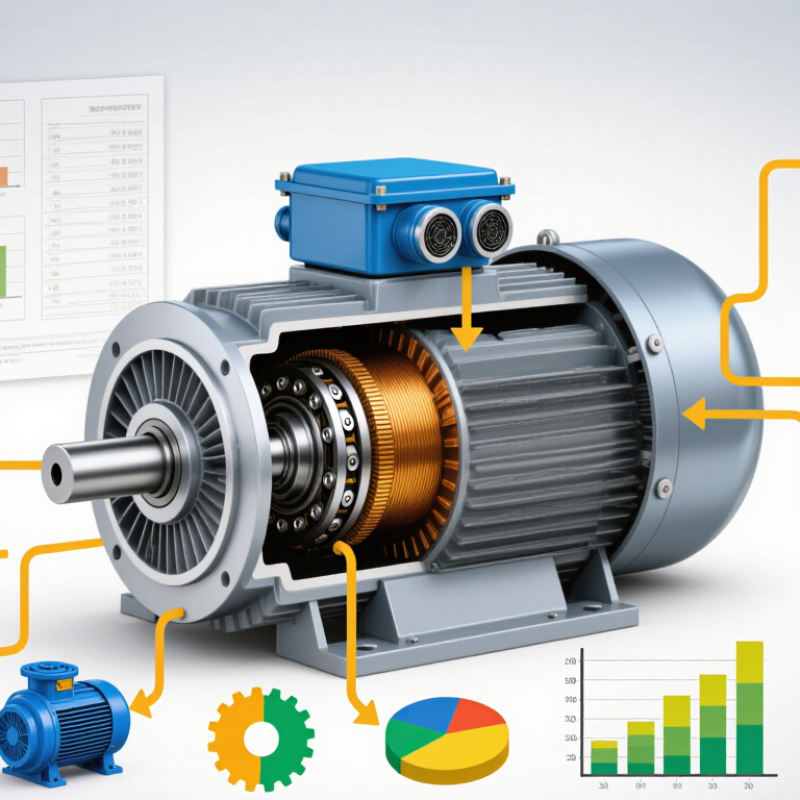
Choosing a high-efficiency motor in 2026 begins with clear performance goals, not a single efficiency percentage. The rating should reflect the motor’s tested efficiency at its intended load, speed, voltage, and frequency. Efficiency classes such as IE3 or IE4 provide useful benchmarks under recognized testing standards, but they do not describe every operating condition. Check the nameplate, test method, duty cycle, temperature rise, and power factor.
Define the real load profile before comparing motors. A 22 kW pump running eight hours daily may spend much of its time below full load. In that case, partial-load efficiency and variable-speed performance matter more than the full-load figure. Record starts per hour, operating speed, ambient temperature, and expected service life. Include inverter compatibility when electronic speed control is required. A qualified engineer should verify harmonics, cooling, insulation, and protection settings.
Small details affect the result.
A motor with excellent laboratory efficiency can waste energy if oversized, poorly aligned, or operated far from its design point. Maintenance records often reveal these problems faster than a brochure. I have seen energy estimates change after measuring actual current and load instead of trusting assumptions. That experience is worth remembering: the “best” rating may not deliver the best field performance. Set measurable goals, such as reduced kilowatt-hours, lower heat, acceptable starting torque, and stable operation during peak demand. Recheck those goals after installation, because real machines rarely behave exactly as predicted.
| Motor Rating / Use Case | Recommended Efficiency Class | Typical Full-Load Efficiency Target* | Expected Energy-Saving Goal | Power Factor Target | Speed and Control Recommendation | Key Selection Checks |
|---|---|---|---|---|---|---|
| 0.75–3 kW Small pumps, fans, conveyors and machine tools |
IE3 minimum target; IE4 where operating hours are high | IE3: approximately 80.5–87.5% IE4: approximately 82.5–89.5% |
Reduce annual motor electricity use by approximately 2–6% versus an IE2 replacement | ≥0.78 at rated load; verify partial-load performance | Use a 4-pole motor for moderate speed; use a VFD for variable-flow loads | Starting current, minimum stable speed, enclosure, cooling and shaft-load compatibility |
| 4–15 kW Industrial fans, pumps, compressors and material handling |
IE3 for standard duty; IE4 for continuous operation | IE3: approximately 88.0–91.5% IE4: approximately 90.0–93.0% |
Reduce annual electricity use by approximately 3–8% versus an IE2 motor | ≥0.82 at rated load; consider system power-factor correction | Choose 2-pole for high speed and 4-pole for lower noise and improved efficiency | Duty cycle, load profile, VFD compatibility, bearing insulation and thermal margin |
| 18.5–55 kW Process pumps, compressors, mixers and production lines |
IE4 preferred for high annual operating hours; IE3 for lower utilization | IE3: approximately 92.0–94.5% IE4: approximately 93.5–95.5% |
Reduce annual electricity use by approximately 4–10% versus an IE2 motor | ≥0.85 at rated load; assess harmonics when operated with a VFD | Use a VFD where speed reduction can follow the process demand | Overload capability, acceleration time, cooling at low speed, vibration and service factor |
| 75–160 kW Large pumps, fans, compressors and continuous-process equipment |
IE4 standard; IE5 when the motor and drive system are designed as a matched package | IE3: approximately 95.0–96.0% IE4: approximately 96.0–97.0% IE5: commonly above 97.0% |
Reduce annual electricity use by approximately 5–12% versus an IE2 motor | ≥0.88 at rated load; include drive losses in system calculations | Select 4-pole or 6-pole designs for high torque and lower mechanical stress | Total cost of ownership, cooling method, shaft voltage, bearing life and harmonic limits |
| 185–375 kW Heavy-duty compressors, crushers, mills and large process drives |
IE4 or higher where available and technically suitable | IE3: approximately 96.0–96.8% IE4: approximately 96.8–97.5% |
Reduce annual electricity use by approximately 4–9% versus an IE2 motor | ≥0.90 at rated load; evaluate demand charges and reactive power | Use a VFD only after checking short-circuit capacity, harmonics and motor insulation | Starting method, inertia, torsional resonance, protection settings and maintenance access |
| Above 375 kW Large continuous-duty industrial systems |
Specify the highest verified class that meets the application and local regulations | IE4 designs commonly target approximately 97.0–98.0%; actual values depend strongly on rating and pole count | Prioritize lifecycle savings; even a 1% efficiency improvement can save substantial annual energy | Typically ≥0.90 at rated load; optimize the complete electrical system | Perform a system study covering speed, torque, starting, grid impact and cooling | Verified test data, efficiency tolerance, lifetime, spare parts, installation and service capability |
*Efficiency figures are typical engineering targets for three-phase, 50 Hz, four-pole motors operated near rated load. Actual certified values vary with output, pole count, voltage, frequency, enclosure, cooling method and applicable regional standards.
Start with the load profile, not only rated power. Record torque, speed, starts, idle periods, and operating hours. Pumps and fans often need variable torque. Conveyors, compressors, and hoists may need steady torque during acceleration. Check inertia and short overloads. The nameplate is not enough.
Induction motors suit many constant-speed applications. Permanent magnet and synchronous reluctance motors can perform well under changing loads. Compare efficiency across the full duty cycle. A motor can look efficient but perform poorly when lightly loaded.
Often, yes. Variable-speed drives can reduce throttling losses in pumps and fans. A twenty percent speed reduction may greatly reduce idealized fan power. Real savings depend on minimum flow, sensors, tuning, and bypass operation. Not always.
Dust, moisture, altitude, and hot rooms can reduce cooling performance. Check insulation life, enclosure protection, ventilation, and temperature limits. Confirm compatibility with the control system. Cable length and bearing protection also matter.
Request rated-load efficiency, power factor, temperature rise, and test conditions. Use recognized international efficiency classes as a reference. They do not prove site performance. Ask for measurements from conditions close to your installation.
Include purchase, installation, electricity, controls, maintenance, and downtime. Record tariffs and yearly operating hours. A motor running 6,000 hours magnifies small efficiency differences. Heat becomes a cost every hour. The spreadsheet may still be wrong.
Check alignment, soft-foot, cable sizing, ventilation, ambient temperature, and bearing access. One coupling offset can create vibration and heat. Verify ramp times and fault responses. A clean calculation cannot repair poor installation.
Review vibration, temperature, insulation resistance, and starts per hour. Compare maintenance records from similar duty cycles. Check bearing design, service factor, and overload history. Leave room for unexpected downtime. Emergency repairs sometimes create oversized motors.
Choosing a High Efficiency Motor in 2026 requires more than selecting the highest efficiency label. Begin by defining performance goals, including required output, duty cycle, load profile, starting conditions, and acceptable operating limits. Match the motor type to the application, considering variable or constant loads, speed changes, ambient temperature, humidity, space constraints, and installation conditions. Then compare efficiency classes, power ratings, torque characteristics, and speed requirements to ensure the motor performs efficiently without unnecessary oversizing.
A complete evaluation should also include energy consumption, electricity costs, control systems, installation requirements, and maintenance access. Variable-speed operation may improve savings in applications with changing demand, while appropriate controls can support smoother starting and better process control. Before purchasing, verify applicable standards, testing information, safety requirements, and compatibility with the existing system. Finally, calculate total ownership costs by combining purchase price, installation, energy use, servicing, downtime risks, and expected service life. The best choice balances efficiency, reliability, operating flexibility, and long-term value rather than focusing on initial cost alone.
