Noco tech Motor
Buying a Pneumatic Motor for international operations involves more than comparing prices and advertised horsepower. Air pressure, torque requirements, duty cycles, installation space, and environmental conditions can change the right choice. A motor that performs reliably in a dry workshop may struggle in a humid food-processing area or a dusty quarry.
This guide presents ten practical buying tips for global buyers. Each tip reflects common purchasing decisions made by engineers, maintenance teams, and equipment distributors. Check the motor’s rated speed under your actual air pressure. Confirm whether the supplier specifies air consumption clearly. These details affect operating costs, compressor capacity, and production stability.
Small details matter.
A dependable supplier should provide technical drawings, performance data, material information, and traceable quality records. Buyers should also review connection standards, sealing materials, noise levels, lubrication requirements, and expected service intervals. Regional delivery conditions can create additional concerns, including packaging quality, spare-parts access, and technical support after installation.
Do not rely on catalog figures alone. Ask for application-based recommendations and verify them against your equipment conditions. Some product claims may sound impressive but remain difficult to compare fairly. That is where careful questioning helps. This article also recognizes an uncomfortable reality: the cheapest motor may become the most expensive option after pressure losses, premature wear, or delayed maintenance. A thoughtful decision combines engineering evidence, supplier experience, and realistic lifecycle costs.
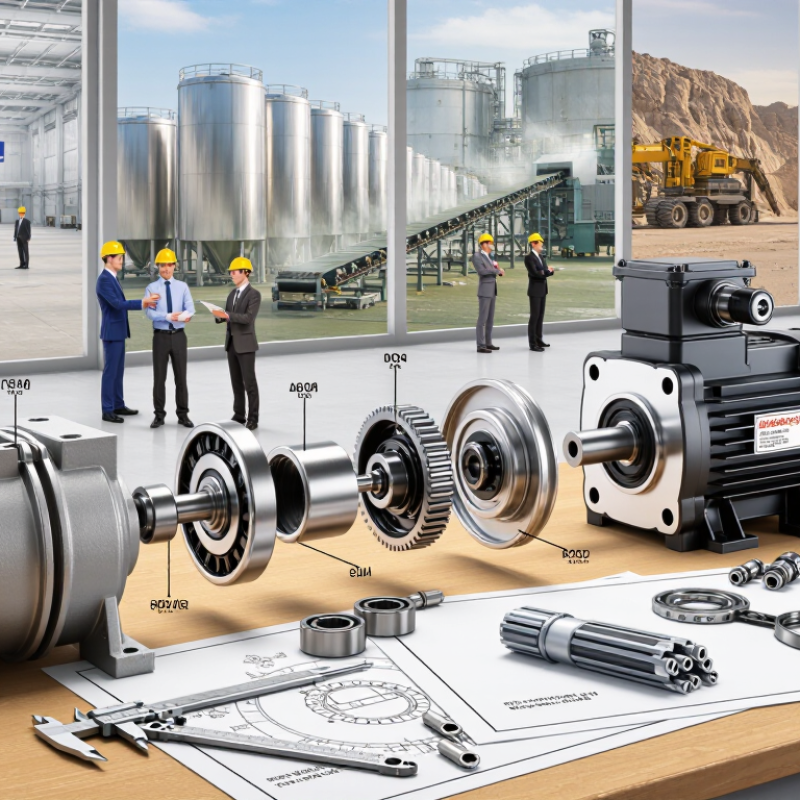
Pneumatic motors convert compressed-air energy into rotary motion. Their main designs are vane, piston, and turbine motors. Vane motors use air pressure to push sliding vanes around an eccentric rotor. They offer compact construction and smooth starting torque. Piston motors create rotation through reciprocating pistons and connecting mechanisms. They usually deliver stronger torque at low speeds. Turbine motors use high-velocity air across blades, producing very high rotational speed. They suit light-duty grinding or drilling, but often need gearing for torque.
Operating conditions matter more than catalogue speed. A motor rated at 6 bar may perform poorly when supply pressure drops through undersized hoses, filters, or couplings. The U.S. Department of Energy reports that compressed-air systems can consume about 10% of industrial electricity. Its compressed-air guidance also identifies leakage losses of 20–30% in poorly maintained systems. That makes airflow demand a purchasing concern, not a minor specification. Check torque curves, starting torque, free speed, air consumption, duty cycle, and exhaust direction.
Match the motor to the load’s real behavior. Intermittent impact tools need different protection from continuous conveyor drives. In wet or dusty areas, sealing and corrosion resistance deserve close inspection. ISO 8573-1 helps buyers define compressed-air purity requirements. A clean air supply can extend motor life. Still, a polished specification sheet can mislead. Field pressure, temperature, lubrication, and operator habits change performance. Buyers should request test conditions and verify them during commissioning. Small details often decide reliability.
A pneumatic motor should match the job, not just the catalog rating. Start by recording required torque, speed, rotation direction, and operating hours. Include the starting load. Some machines need high breakaway torque, while others need steady speed under changing resistance.
Check the available air pressure and flow at the motor inlet. A compressor may show adequate pressure, yet narrow hoses can reduce real performance. Measure the air supply during operation. Do not rely only on an idle gauge. Define the duty cycle, too. Continuous running, frequent starts, and short bursts create different thermal and maintenance demands.
Consider the working environment carefully. Dust, moisture, heat, and limited ventilation can affect housing materials and lubrication. For food, chemical, or outdoor applications, confirm suitable materials and protection requirements. Noise limits may also influence the motor size and exhaust arrangement. Ask for tested performance curves, not only maximum figures. They reveal how torque changes with speed and pressure.
In field selection work, I have seen buyers focus too heavily on peak torque. That choice sometimes produces unnecessary air consumption and poor control. A spreadsheet can look precise while missing real load inertia. Test the motor with the actual transmission, hose length, and valve configuration whenever possible. Leave a small performance margin, but question every extra percentage. Oversizing is not automatically safer.
10 Pneumatic Motor Buying Tips for Global Buyers
Torque, speed, air consumption, and efficiency must be compared under identical conditions. A motor producing 50 Nm at 6 bar may deliver far less torque at 4 bar. Ask for torque-speed curves, not only maximum torque figures. Check both running and starting torque. Starting torque matters when the shaft carries a heavy load.
Air consumption is usually stated in normal litres per minute or standard cubic feet per minute. Confirm the reference pressure and measurement method. Otherwise, two quotations can look comparable but describe different tests. The U.S. Department of Energy’s Improving Compressed Air System Performance sourcebook reports that leaks often waste 20–30% of compressor output. That loss can exceed the motor’s purchase price over time. Small leaks are expensive.
Efficiency needs careful interpretation. Compare output power with air input at the same pressure, speed, and load. A lower-speed motor may consume less air, yet stall more easily. A high-speed model may require gearing, adding losses and maintenance. In practical plant assessments, pressure drops across filters and hoses often reduce real performance. I have seen selection sheets ignore this detail. That is a mistake. The Compressed Air Challenge Best Practices guide also emphasizes system-level measurement, including demand profiles and leakage surveys. Record actual cycle time, loaded torque, and daily operating hours before choosing. Static catalogue data is useful, but incomplete.
Global buyers should inspect materials before comparing prices.
Stainless steel or coated aluminum resists moisture, but coating damage can expose weaker metal. In coastal plants, check salt-spray resistance and galvanic corrosion around fasteners. I have seen a clean housing fail because its internal seals were incompatible with synthetic oil. Ask for seal material, temperature range, and chemical-resistance data. Nitrile suits many applications, while fluorocarbon compounds may perform better at higher temperatures. Confirm these choices against the supplier’s test records, not a sales description.
Durability depends on air quality and maintenance.
ISO 8573-1 classifies compressed air by particles, water, and oil, so buyers should match the motor with the required air class. The U.S. Department of Energy reports that compressed-air leaks can waste 20–30% of compressor output. That waste increases operating cost and can reduce motor speed. Check rated torque, free speed, duty cycle, bearing life, and performance at minimum pressure. Small details matter. A motor rated for continuous duty may still overheat in a poorly ventilated enclosure.
Safety needs measurable evidence.
OSHA’s 29 CFR 1910.95 establishes an 8-hour occupational noise limit of 90 dBA, with stricter controls as exposure rises. Request noise data at the operator’s position, not only beside the exhaust. Add exhaust silencers carefully; excessive back pressure can reduce output. Environmental compatibility also includes temperature, dust, washdown chemicals, and disposal requirements. My own purchasing mistake was treating “industrial grade” as a test result. It is not. Insist on traceable certificates, installation instructions, and independent verification where failure could harm workers.
10 Pneumatic Motor Buying Tips for Global Buyers
A reliable supplier should explain performance limits, not only quote a low price. Ask for test records, material specifications, production capacity, and recent quality data. Request a sample motor for inspection under your actual air pressure and load. Small details matter, such as thread accuracy, shaft finish, and noise at continuous speed. A video call inside the factory can reveal useful evidence. It is not perfect, but it improves confidence.
Compare total cost, not unit price alone. Include tooling, packaging, freight, import charges, spare parts, installation, and expected maintenance. A cheaper motor may consume more compressed air every hour. That difference can become expensive across a large production line. Calculate energy use over one year. Recheck the assumptions. Air leakage and unstable pressure are often underestimated.
Standards must match the destination market and the machine’s working environment. Confirm ratings for pressure, temperature, moisture, dust, and corrosion exposure. Ask for relevant certificates, inspection reports, and traceable serial records. After-sales support should include response times, troubleshooting documents, replacement parts, and technician training. Put these terms in the contract. Vague promises create delays. A practical weakness is easy to miss: some suppliers respond quickly before payment but slowly after delivery. Test support with a technical question before ordering.
| No. | Buying Dimension | What to Evaluate | Practical Data or Benchmark | Documents or Questions to Request | Buyer Action |
|---|---|---|---|---|---|
| 1 | Match Torque and Speed to the Load | Check starting torque, running torque, output speed, direction of rotation, duty cycle, and whether the motor must start under load. | Typical operating pressure: 4–7 bar (58–102 psi). Typical speed range: approximately 100–20,000 rpm, depending on motor type and gearing. |
Request a torque-speed curve at the proposed air pressure, plus maximum starting torque and permissible radial or axial loads. | Select a motor whose continuous operating point is below the published torque-speed curve rather than sizing only by maximum torque. |
| 2 | Verify Air Consumption and Supply Capacity | Compare free-air consumption with the compressor, receiver, piping, filters, valves, and other pneumatic equipment sharing the line. | Air consumption is commonly stated in L/min, m³/min, or SCFM. A pressure drop of more than about 0.5 bar can materially reduce output. | Ask whether the rating is measured at free-air conditions or inlet conditions, and request the test pressure, duty cycle, and measurement method. | Calculate peak demand, not only average demand, and specify the required air quality and minimum inlet pressure at the motor. |
| 3 | Assess Total Cost of Ownership | Include purchase price, freight, import duties, installation, air treatment, energy consumption, maintenance, spare parts, and downtime. | Compressed-air generation is energy-intensive; leakage, excessive pressure, poor filtration, and throttling can significantly increase operating cost. | Request a five-year cost model with stated assumptions for operating hours, electricity price, air consumption, maintenance intervals, and replacement parts. | Compare suppliers using the same duty cycle and energy assumptions instead of comparing unit prices alone. |
| 4 | Check Material and Environmental Suitability | Evaluate housing material, shaft material, seals, bearings, corrosion resistance, ambient temperature, humidity, dust, washdown, and hazardous-area requirements. | Confirm the specified ambient and medium temperature range. Standard elastomers may require substitution for low-temperature, high-temperature, or chemical exposure. | Request material declarations, seal compatibility information, ingress-protection details where applicable, and hazardous-area certification when required. | Provide the actual operating environment, including cleaning chemicals, salt exposure, dust classification, and temperature extremes. |
| 5 | Confirm Port Threads and Installation Dimensions | Verify inlet and exhaust port size, thread form, shaft diameter, keyway, mounting pattern, rotation direction, and available installation space. | Common connection systems include ISO 7-1 tapered pipe threads, ISO 228-1 parallel threads, NPT, and metric connections. These are not automatically interchangeable. | Request a dimensioned drawing, 3D CAD file, port-thread specification, shaft tolerance, mounting tolerances, and recommended hose size. | Approve the drawing before production and use suitable adapters only when they do not restrict flow or compromise sealing. |
| 6 | Evaluate Supplier Quality Controls | Review production capability, traceability, incoming-material inspection, machining controls, assembly testing, calibration, and final inspection. | Useful quality-system evidence may include a current ISO 9001 certificate and documented inspection records for torque, speed, leakage, noise, and vibration. | Request certificate scope, sample inspection reports, serial-number traceability, nonconformance procedures, and the acceptance-test specification. | Use a pre-shipment inspection or independent inspection for the first order and for technically critical applications. |
| 7 | Verify Applicable Standards and Market Access | Determine which regulations apply in the destination country and to the complete machine, not only to the motor. | Potentially relevant references include ISO 12100 for machinery risk assessment, ISO 4414 for pneumatic systems, and IEC 60079 for explosive atmospheres when applicable. | Ask for the declaration of conformity, test reports, technical file references, and any required electrical, pressure, food-contact, or hazardous-location documentation. | Have the importer, integrator, or compliance specialist confirm the exact legal requirements before ordering. |
| 8 | Review Noise, Vibration, and Safety Features | Consider exhaust noise, vibration transmitted to the machine, overspeed risk, emergency stop behavior, and guarding of rotating parts. | Noise depends on speed, exhaust configuration, pressure, and silencing. A silencer can reduce noise but may also create back pressure if undersized or clogged. | Request noise-test conditions, recommended silencer specifications, overspeed limits, braking requirements, and installation safety instructions. | Include a properly sized exhaust silencer, shut-off and dump valve, speed control, and mechanical guarding in the system design. |
| 9 | Compare Lead Time, Packaging, and Logistics | Evaluate production lead time, sample availability, minimum order quantity, export packaging, shipping terms, documentation, and customs support. | For international shipments, confirm the agreed Incoterms® 2020 rule, packed dimensions, gross weight, HS classification, and required origin or compliance documents. | Request a written quotation showing unit price, tooling, packaging, freight assumptions, insurance responsibility, lead time, and validity period. | Use a purchase order that defines inspection points, delivery milestones, packaging requirements, and remedies for late or nonconforming goods. |
| 10 | Measure After-Sales Support and Spare-Parts Access | Review warranty duration, response time, troubleshooting support, repair capability, spare-parts availability, training, and product-change notification. | A useful service commitment should state the warranty start point, exclusions, claim evidence, replacement process, and expected response time in business days. | Request a spare-parts list, exploded assembly drawing, maintenance schedule, service manual, warranty terms, and escalation contacts. | Prefer suppliers that can support local service, provide stable part numbers, and commit to long-term availability of seals, bearings, silencers, and repair kits. |
Buyer note: Performance values vary by motor design, air pressure, lubrication, load, and test method. Treat the benchmarks as screening references and use the supplier’s verified test data and your application conditions for final selection.
Vane, piston, and turbine motors are the common types. Vane motors start smoothly and remain compact. Piston motors provide stronger low-speed torque. Turbine motors reach very high speeds. They suit light grinding or drilling. Not every catalogue claim fits real work.
Compressed air pushes sliding vanes around an eccentric rotor. This creates continuous rotary motion. Pistons move back and forth through connecting mechanisms. Turbines use fast air across blades. Their working sounds simple. Actual results depend on the load and air supply.
A motor rated at 6 bar may receive less pressure in practice. Undersized hoses, blocked filters, and restrictive couplings reduce airflow. Long pipe runs can also create pressure loss. Measure pressure near the motor during operation. Static pressure alone can mislead.
Compare torque curves, starting torque, free speed, air consumption, and duty cycle. Check the exhaust direction, too. Starting torque matters for heavy loads. Free speed matters less under resistance. Ask for test conditions and repeat them during commissioning.
Study the load’s real behavior. Intermittent impact tools need different protection from continuous conveyor drives. Wet areas require sealing and corrosion resistance. Dusty areas need suitable protection and maintenance access. A motor can look correct on paper yet fail in the field.
Clean, properly prepared air can reduce wear and extend service life. Define purity requirements with ISO 8573-1. Check moisture, particles, and oil conditions. Poor lubrication can damage moving parts. Excess lubrication may also create problems. The correct balance is easy to overlook.
Include tooling, packaging, freight, import charges, installation, spare parts, and maintenance. Add yearly compressed-air consumption. A cheaper motor may use more air every hour. Across a production line, that difference becomes significant. Recheck your assumptions. Energy estimates are often too optimistic.
Ask for test records, material details, production capacity, and recent quality data. Request a sample motor for inspection. Test it with your actual pressure and load. Inspect thread accuracy, shaft finish, and continuous-speed noise. A factory video call can help. It is not proof.
Confirm response times, troubleshooting documents, replacement parts, and technician training. Put these terms in the contract. Ask a technical question before ordering. Slow replies may reveal future delays. Support promises can sound good. Verify them early.
Choosing the right Pneumatic Motor requires more than comparing prices or product descriptions. Global buyers should first understand the differences between motor types, their operating principles, and how each design suits a specific application. Clearly defining required torque, speed, duty cycle, air pressure, operating environment, and control method helps narrow the options. A careful comparison of air consumption and efficiency is also essential, as these factors directly affect productivity and long-term operating costs.
Buyers should also examine construction materials, durability, corrosion resistance, safety features, and compatibility with temperature, dust, moisture, or other workplace conditions. Supplier evaluation should include product consistency, technical communication, quality documentation, applicable standards, delivery capability, and after-sales support. Finally, total cost should cover installation, maintenance, replacement parts, energy use, and expected service life—not only the initial purchase price. A structured evaluation process enables international customers to select a reliable Pneumatic Motor that delivers stable performance, safe operation, and lasting value.
