 Noco tech Motor
Buying a Synchronous Motor is a decision about the whole drive system, not a nameplate alone. A motor that looks suitable on paper can disappoint when its load, starting method, or operating schedule differs from the real application. Small details matter. A pump may run steadily for hours, while a compressor faces frequent starts and changing torque. Those differences affect what buyers should ask suppliers.
A concise paraphrase—not a verbatim quotation—of electric-machine researcher Ion Boldea’s design perspective is: “Match the motor to its duty, not merely its rated power.” Use that idea to assess the seven buying tips ahead. Check required output, speed stability, supply voltage, starting arrangements, enclosure, cooling, and the expected service environment. Ask for efficiency data at the actual operating point, not only a headline figure. Confirm what protection and maintenance the installation needs. Request written specifications, test information, and clear warranty terms; compare like with like. A supplier’s confident promise is not a substitute for documentation.
There is no universal best choice. A technically sound motor can still be a poor fit if installation limits, maintenance skills, or future load changes were overlooked. Buyers sometimes focus too narrowly on purchase price. That is understandable, but incomplete. The following tips offer a practical way to compare options, spot unanswered questions, and make a more defensible selection. Expect to revisit a few assumptions. That is part of buying well.
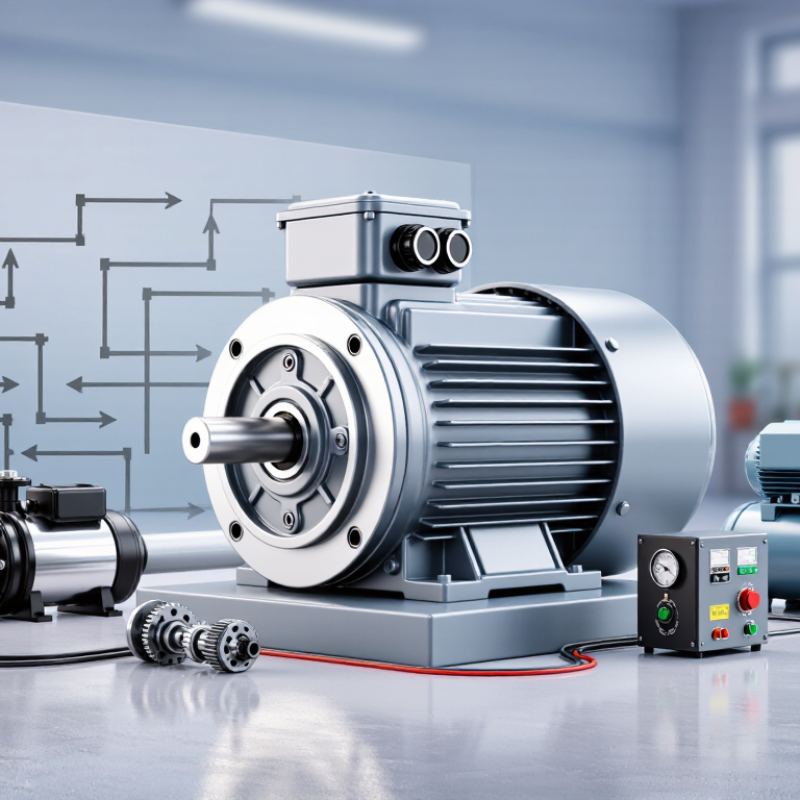
A synchronous motor turns when its rotor magnetic field locks to the rotating field produced by the stator. Once synchronized, it runs at a speed set by supply frequency and pole count, rather than slipping as an induction motor does. For example, a four-pole motor on a 60 Hz supply runs at 1,800 rpm. Precise speed matters in large pumps, compressors, mills, and other steady-load machinery.
Excitation current also gives operators a way to adjust power factor. In some installations, an overexcited motor can help offset lagging power factor from other equipment. The U.S. Department of Energy’s 2014 sourcebook, Improving Motor and Drive System Performance, estimates that motor-driven systems use about 68% of U.S. industrial electricity. That figure covers motor systems broadly, not synchronous motors alone. Still, it shows why matching a motor to its load deserves careful attention.
There is a catch. A synchronous motor may need a starter or variable-frequency drive to reach operating speed, and its controls can add cost and complexity. I would check the load profile, supply frequency, starting torque, and maintenance capacity before choosing one. Small details matter: a compressor that starts under pressure may need a different setup from a pump that starts unloaded. Not every site gets this right.
A synchronous motor’s rotor runs in step with the rotating magnetic field produced by its stator when the motor is operating synchronously. The table below summarizes the operating principle, common applications, and seven practical points to check before selecting a motor.
| Topic | Useful facts and selection guidance | What to verify |
|---|---|---|
| How Synchronous Motors Work and Where They Are Used | ||
| Operating principle | The stator’s alternating current creates a rotating magnetic field. The rotor’s magnetic field aligns with it and, once synchronized, turns at synchronous speed. The speed is calculated as Ns = 120 × f ÷ P, where Ns is speed in revolutions per minute, f is supply frequency in hertz, and P is the number of poles. For example, a four-pole motor runs at 1,800 rpm on a 60 Hz supply or 1,500 rpm on a 50 Hz supply, before any load-related effects outside synchronous operation. | Confirm supply frequency, pole count, required shaft speed, and whether a variable-frequency drive is part of the system. A synchronous motor generally needs a suitable starting method or drive to accelerate and synchronize. |
| Common applications | Synchronous motors are used in applications that benefit from precise, constant speed or power-factor control, including compressors, pumps, fans, mills, conveyors, and industrial process equipment. Smaller permanent-magnet synchronous motors are also used in servo systems and other controlled-motion equipment. | Match the motor type and control method to the driven machine, required speed range, starting load, and precision needs. |
| 7 Buying Tips | ||
| 1. Match power and torque to the load | Select a motor based on the machine’s required shaft power and torque throughout its operating range. Starting, acceleration, and peak-load requirements can differ from the normal running load. | Check rated power, rated torque, starting torque, load inertia, acceleration time, and any overload requirement against the driven equipment’s specifications. |
| 2. Confirm speed and supply frequency | Synchronous speed depends on supply frequency and pole count. A different pole configuration or supply frequency changes the motor’s base synchronous speed. | Verify the required shaft speed, available frequency, voltage, phase, and whether speed adjustment is needed. For variable speed, confirm drive and motor compatibility. |
| 3. Plan the starting method | Many synchronous motors are not inherently self-starting from a fixed-frequency supply. Depending on the design, starting may use a variable-frequency drive, an auxiliary starting arrangement, or another manufacturer-specified method. | Establish how the motor will start under the actual load, including permissible starting current, acceleration time, and the required synchronization procedure. |
| 4. Consider power factor and excitation | Some wound-field synchronous motors allow power-factor adjustment by changing rotor excitation. Permanent-magnet designs use rotor magnets and do not provide the same excitation adjustment. | If power-factor correction is a goal, confirm the motor’s excitation capability, control requirements, operating limits, and expected system-level benefit with a qualified electrical engineer. |
| 5. Check duty and operating environment | Motor suitability depends on its duty cycle and site conditions, such as ambient temperature, dust, moisture, corrosive substances, altitude, and vibration. | Specify the required duty rating, enclosure and ingress protection, insulation system, ambient limits, mounting arrangement, and any hazardous-area certification required by the site. |
| 6. Evaluate efficiency and cooling | Efficiency and temperature rise depend on motor design, load, speed, cooling method, and operating conditions. A motor’s cooling performance can be affected when it runs at reduced speed with a drive. | Compare efficiency data at the expected load point, confirm the cooling method, and check whether additional cooling or thermal protection is needed for the intended operating range. |
| 7. Review controls, protection, and maintenance | The required control system varies by motor type. Protection may need to address overload, overheating, phase conditions, and drive-related faults. Maintenance needs also differ between designs. | Confirm control-interface requirements, compatible protection devices, sensor provisions, service access, spare-parts availability, and the maintenance plan for bearings and other serviceable components. |
Final selection should be checked against the motor and drive technical data, the driven machine’s load profile, and applicable electrical and site-safety requirements.
Record shaft speed, normal and peak torque, acceleration time, and frequent starts, stops, or reversals. Include measured load data when available. Estimates can mislead.
It may miss continuous load, starting torque, and changing conditions. A loaded conveyor needs different checks than a steady fan. Worth rechecking.
Compare voltage, phase count, frequency, and available starting current. Voltage alone is not enough. Also confirm the control requirements.
They determine synchronous speed, so check both against the machine’s required shaft speed. Frequent speed changes may need a compatible control method. Small mismatch, big headache.
Review starting torque, running torque, load inertia, and pull-in torque. A heavy flywheel may take longer to accelerate than expected. It happens.
Check heat, dust, moisture, altitude, ventilation, and operating hours. Match cooling, enclosure protection, insulation, and duty rating to the actual site. Details count.
Compare shaft diameter, keyway, mounting dimensions, and rotation direction with equipment drawings. These are easy to overlook. One measurement can change the plan.
Share the nameplate photo, wiring details, and load data. Request written confirmation for unclear specifications, including starter or excitation needs and startup behavior.
A Synchronous Motor runs in step with the frequency of its power supply, making it useful for applications that need steady speed and precise timing. Before choosing one, define how the motor will operate: consider the driven equipment, required speed and torque, duty cycle, starting method, power supply, and installation environment. Clear requirements help narrow the options and avoid paying for features the application does not need.
When comparing motors, review key specifications such as rated power, voltage, frequency, efficiency, speed, torque, and enclosure or cooling needs. Assess suppliers by their technical support, service availability, delivery terms, and the expected costs of installation, maintenance, and energy use over the motor’s lifetime. Before placing an order, confirm that the selected motor matches the equipment, control system, mounting arrangement, and site conditions. Careful checks help buyers make a reliable choice that fits both operational needs and total ownership costs.
