Choosing the right stepper gear motor is crucial for various applications. A stepper gear motor combines precision and power, making it ideal for robotics, CNC machines, and other automation tasks. With so many options available, selecting the best one can be overwhelming.
It's essential to consider a few key factors to make an informed decision. Manufacturers offer a range of models, each with unique specifications and features. For instance, torque, speed, and size can greatly influence your project's success. Understanding how these elements align with your requirements will help narrow your choices.
Many people overlook the importance of compatibility with existing systems. A mismatched stepper gear motor can lead to inefficiencies and operational issues, ultimately affecting performance. Take time to research and possibly consult experts. Such steps can prevent costly mistakes and ensure you choose the right stepper gear motor for your needs.
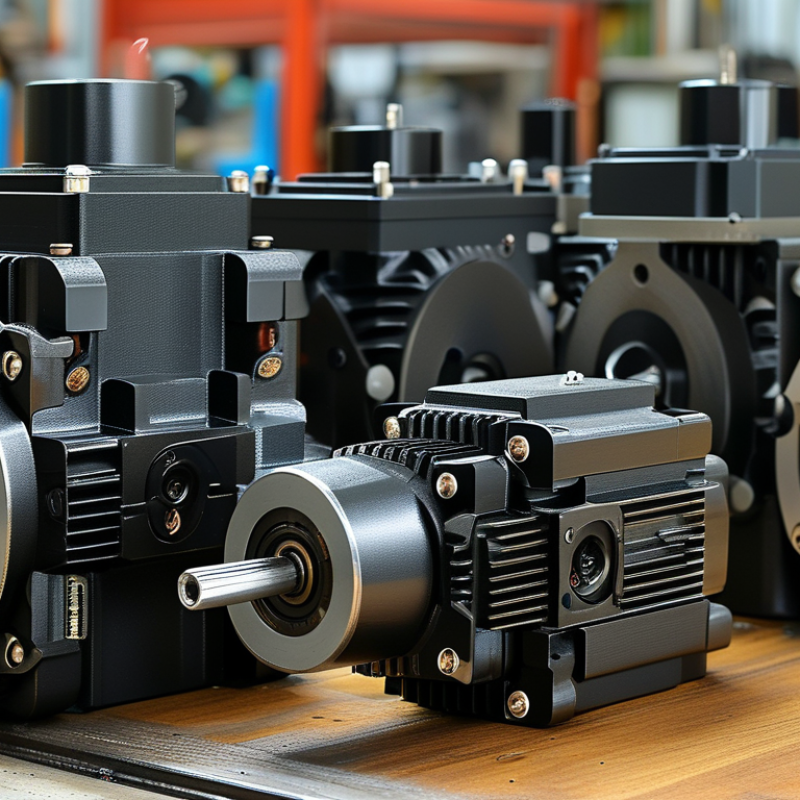
Understanding Stepper Gear Motors and Their Applications
Understanding stepper gear motors is essential for many applications in automation and robotics. These motors offer precise control, accuracy, and reliability. According to industry data, stepper motors are widely used in medical devices, CNC machinery, and 3D printers. Their ability to move step-by-step allows for high precision, making them ideal for tasks that require exact positioning.
In recent market analyses, the demand for stepper motors is projected to grow at an annual rate of over 5%. This growth reflects their increasing use in various sectors, particularly in robotics and industrial automation. Companies are drawn to stepper motors due to their straightforward control schemes, which simplify system integration. However, choosing the right motor requires careful consideration of torque requirements and application specifics. Not all stepper motors provide the same performance characteristics.
Some applications may need higher torque at low speeds, while others benefit from rapid acceleration. It’s also important to assess the motor's heat dissipation. Excessive heat can lead to failure or suboptimal performance. Engineers must evaluate the environmental conditions, such as temperature and humidity, influencing motor operation. Therefore, a deep understanding of both the theoretical and practical aspects of stepper gear motors is crucial for optimizing their application.
Key Specifications to Consider When Choosing a Stepper Gear Motor
When selecting a stepper gear motor, key specifications play a crucial role. Understanding torque, speed, and precision are essential for making an informed choice. A recent industry report from the International Journal of Advanced Robotics highlights that motors with higher torque ratings typically perform better in demanding applications. This insight can help engineers prioritize the right gear motor for their specific needs.
Temperature ratings are another critical specification. Operating temperatures can impact the overall durability and performance. For instance, motors rated for higher temperature ranges can operate efficiently in challenging environments. However, many users overlook this aspect, risking equipment failure.
Choosing the right voltage is equally important. A motor’s voltage affects its power and efficiency. A mismatch can lead to reduced performance or even burnout. It’s important to assess your application requirements carefully. A miscalculation here can lead to unnecessary costs or downtime. Always consult with a qualified expert when determining the right specifications.
Top 5 Tips for Choosing the Right Stepper Gear Motor
Evaluating Precision and Torque Requirements for Your Project
When selecting a stepper gear motor, understanding precision and torque is crucial. These factors directly influence your project's performance.
Precision refers to how accurately the motor can position itself. For applications requiring fine movement, like CNC machines or robotics, high precision is vital. Torque, on the other hand, is the rotational force. It affects the motor's ability to handle loads. You need to assess the weight and speed requirements of your project before making a choice.
You may find that balancing precision and torque can be challenging. A motor with high torque may lack the precise positioning you need for intricate operations.
Conversely, a very precise motor might not provide enough torque for heavier loads. Consider conducting tests or simulations. This can help clarify how different motors perform under your project's specific conditions.
It's important to remain flexible and adjust your expectations based on these results. Each project's needs can vary widely. What works for one application may not suit another. Stay open to reevaluating your options as you gather more data.
Assessing Power Supply and Compatibility with Your Setup
When selecting a stepper gear motor, assessing power supply and compatibility is critical. Many users overlook this crucial aspect, leading to operational failures. Proper power supply is vital for motor performance. Reports suggest that approximately 25% of stepper motor issues stem from inadequate power. Ensuring that your power supply meets the voltage and current requirements of the motor is essential for reliable operation.
Compatibility with your setup includes evaluating connections and mountings. Different applications demand varied specifications. A 2022 industry study highlighted that 40% of system malfunctions are linked to poor integration of components. Ensure that the motor connector matches your controller's output. Evaluating physical dimensions prevents installation errors. Incompatibility can also lead to overloading or underutilization of the motor, which may affect efficiency.
Consider the environment where the motor will operate. Factors such as temperature and humidity can impact performance. A motor rated for specific environmental conditions will ensure longevity. User feedback indicates that around 30% of stepper motors underperform due to environmental miscalculations. Remember to review power ratings and environmental ratings thoroughly before making a purchase decision.
Top 5 Tips for Choosing the Right Stepper Gear Motor
| Tip |
Description |
Power Supply Requirement |
Compatibility |
| 1. Assess Torque Needs |
Determine the torque requirements based on your application to choose a suitable motor. |
Check motor specifications for rated torque. |
Ensure compatibility with load specifications and system design. |
| 2. Verify Voltage Requirements |
Match the motor's voltage rating with your power supply. |
Use a power supply that meets or exceeds motor voltage needs. |
Consider power supply configurations for the entire setup. |
| 3. Check Current Ratings |
Assess stall current and ensure your driver can handle it. |
Ensure current ratings align with driver capabilities. |
Review driver ratings for compatibility with motor current specifications. |
| 4. Consider Step Angle |
Lower step angles provide higher resolution and precision. |
Ensure your driver can accommodate the chosen step angle. |
Match step angle requirements with motion control systems. |
| 5. Evaluate Gear Ratio |
Consider gear ratios to enhance torque or speed based on your needs. |
Select gear motors that meet your torque and speed requirements. |
Ensure gear ratio fits with the intended application and system design. |
Comparing Cost-Effectiveness and Quality of Different Brands
When you're looking to buy a stepper gear motor, cost-effectiveness is essential. It's tempting to choose the least expensive option, but you often get what you pay for. A low-cost motor may fail sooner or deliver subpar performance. This can lead to increased downtime and higher long-term costs.
Different brands offer varying levels of quality. Before making a choice, compare the specifications and warranty offered. Look for reviews to gauge user experiences with durability and efficiency. A more expensive brand might save you frustration in the long run if it provides consistent reliability. Be aware that some well-priced motors may not live up to their promises.
It’s crucial to reflect on your specific needs. Consider the motor’s torque and speed ratings. Does it match your project requirements? A motor that works perfectly in one scenario might perform poorly in another. Finding that balance between cost and quality can be tricky, but taking the time to analyze options pays off.
Conclusion
When selecting the right Stepper Gear Motor for your project, it is crucial to first understand their functionalities and applications across various fields. Evaluating the key specifications, such as step angle, torque, and precision requirements, ensures the motor aligns with your project's needs. Additionally, consider the compatibility with your power supply and overall setup to guarantee smooth operation.
Cost-effectiveness is another vital factor, as different brands may offer varied quality and pricing. By comparing these elements carefully, you’ll be able to make an informed decision that balances performance and budget. Ultimately, the right Stepper Gear Motor choice can significantly enhance the efficiency and effectiveness of your application.
 Noco tech Motor
