Noco tech Motor Noco tech Motor

10 Tips for Choosing the Right Automotive Motor?

Time:2026-10-18 Author:Sienna
0%

Choosing the right Automotive Motor affects performance, safety, energy use, and long-term maintenance. A motor may look suitable on paper, yet fail under real driving conditions. Rated power alone cannot reveal the complete picture.

A practical evaluation starts with the vehicle’s voltage, torque demand, operating speed, and available installation space. Measure the mounting area carefully. A difference of a few millimeters can create costly delays. Check the motor’s duty cycle, cooling method, noise level, and resistance to dust or moisture. These details matter when the vehicle faces traffic, steep roads, repeated starts, or heavy loads. In workshop testing, temperature rise often reveals problems that a short bench test misses. Real conditions are less forgiving.

Experience also shows that supplier support deserves serious attention. Reliable manufacturers provide clear datasheets, test results, warranty terms, and traceable quality information. Ask how efficiency was measured. Ask what happens after failure. That answer matters.

No choice is perfect.

This guide presents ten practical tips for comparing an Automotive Motor with greater confidence. It considers technical compatibility, efficiency, durability, control systems, installation, and total ownership cost. Some decisions remain uncertain without vehicle-specific testing. That is worth admitting. A cheaper motor may reduce the purchase bill but increase energy consumption or service work later. A premium model may still disappoint if the controller or gearbox is poorly matched. Careful selection connects specifications with actual use, not attractive numbers alone.
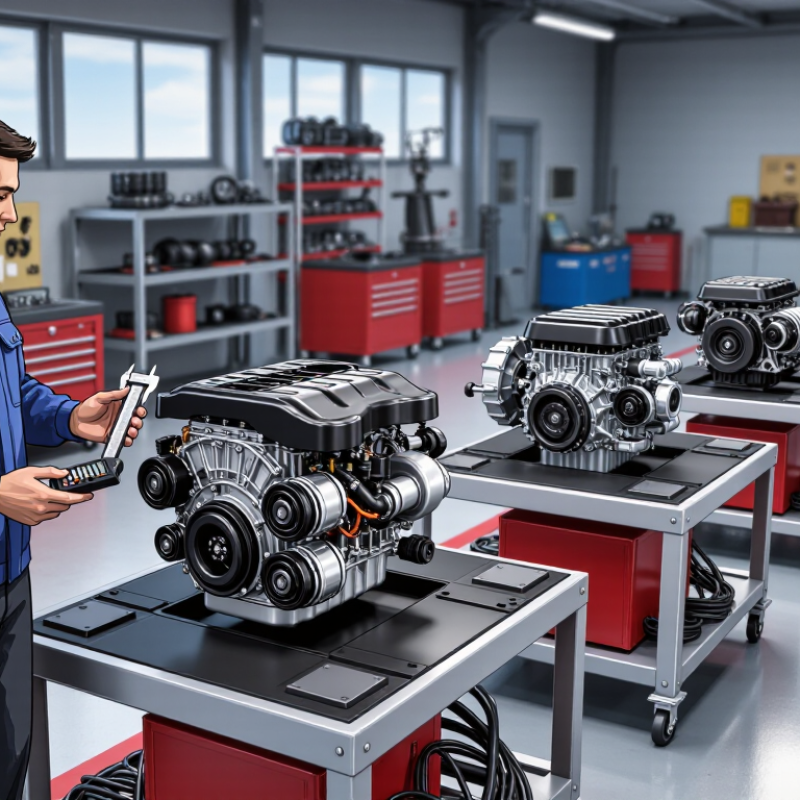
10 Tips for Choosing the Right Automotive Motor?

Identify the Vehicle’s Motor Requirements and Operating Conditions

Choosing the right automotive motor starts with the vehicle, not the catalog. Define mass, payload, wheel diameter, grade, acceleration target, and maximum speed. Then map real operating conditions: stop-and-go traffic, highway cruising, ambient temperature, water exposure, and long climbs. A delivery van needs different torque behavior from a lightweight commuter car. The IEA’s Global EV Outlook 2024 reports nearly 14 million electric cars sold in 2023, representing about 18% of global car sales. That scale increases pressure to select motors using measured duty cycles, not optimistic assumptions.

Convert requirements into wheel torque, motor speed, continuous power, peak power, and usable voltage range. Include gear ratio and drivetrain losses. Peak torque wins launches; continuous torque survives a mountain road. Both matter. Thermal limits deserve early attention. A motor may pass a ten-second acceleration test, then derate after repeated runs. The U.S. Department of Energy reports that battery-electric vehicles typically convert 77–82% of grid energy into movement, compared with roughly 12–30% for conventional vehicles. Efficiency still depends on speed, load, cooling, and control strategy.

Request test data across the full duty cycle. Ask for efficiency maps, torque-speed curves, inverter limits, ingress protection, insulation class, and cooling performance. Compare results at 20°C and hot-soak conditions. Cold starts can expose weak assumptions. A spreadsheet can still lie. One overlooked accessory load, tire change, or payload increase can shift the motor choice. Recheck the model against road measurements, and document every assumption before approving the design.

Compare Motor Types, Power Ratings, and Torque Characteristics

Choosing the right automotive motor begins with comparing motor types, power ratings, and torque characteristics. Brushed DC motors are affordable and easy to control, but their brushes wear over time. Brushless DC motors offer quieter operation, better efficiency, and longer service life. Induction motors handle demanding conditions well, although their controllers can be more complex. Servo motors suit applications requiring precise position control, such as steering or robotic mechanisms.

Power ratings need context. A motor’s peak power may last only a few seconds. Continuous power matters more during climbing, towing, or repeated acceleration. Check the voltage, current, cooling method, and operating temperature together. A small motor may reach its rated output on a test bench, then overheat inside a crowded engine compartment. That difference is easy to miss.

Torque deserves equal attention. High starting torque helps move a heavy vehicle from rest, while sustained torque supports hills and slow-speed work. Study the torque-speed curve rather than reading one maximum figure. Gear reduction can increase wheel torque, but it also reduces speed and adds mechanical losses. I once underestimated heat buildup during repeated starts. That mistake showed why real-load testing matters. Measure torque at the shaft, inspect vibration, and compare efficiency across the actual driving cycle. Reliable suppliers should provide test conditions, tolerances, protection ratings, and service-life data. Claims without those details deserve careful review.

Check Efficiency, Compatibility, Size, and Installation Requirements

10 Tips for Choosing the Right Automotive Motor

Choosing an automotive motor starts with efficiency, not maximum power. Check rated efficiency under the vehicle’s usual load, not only the peak figure. A motor that runs cooler can reduce energy loss and extend component life. Review voltage, current, torque, speed, and duty cycle in the technical data. I once focused on peak torque and overlooked continuous torque. That mistake caused unnecessary heat during repeated operation.

Compatibility requires careful checking. Match the motor with the controller, battery system, shaft design, and expected load. Confirm connector types, control signals, mounting holes, and rotation direction. Measure the available space, including cable clearance and ventilation. Measure twice. Space is deceptive. A compact motor may still fail if its shaft, housing, or cooling path conflicts with nearby parts.

Installation requirements deserve equal attention. Follow the specified mounting orientation and use suitable fasteners. Poor alignment can create vibration, noise, and premature bearing wear. Keep wiring protected from heat, movement, and moisture. Test current draw and surface temperature after installation. Do not trust a short bench test alone. Real driving conditions expose issues that static testing misses. Allow room for inspection and future maintenance. Some choices seem efficient on paper, yet perform poorly after installation. Recheck the calculations when the actual load differs from the estimate.

Evaluate Durability, Maintenance Needs, Warranty, and Manufacturer Support

In workshop inspections, I have learned that motor durability starts with operating conditions. Check the expected load, speed, temperature, vibration, and duty cycle. A motor built for continuous service may fail quickly under frequent starts. Examine housing quality, shaft alignment, bearing protection, and sealing around dusty or wet areas. Small details matter.

Maintenance needs should be practical, not merely listed in a manual. Look for accessible lubrication points, replaceable bearings, clear inspection intervals, and common service tools. Ask how often technicians must check insulation, connections, cooling passages, and abnormal noise. Maintenance records can reveal patterns that specifications miss. Sometimes, a cheaper motor becomes expensive because access is difficult.

Read the warranty carefully. Confirm its duration, coverage, exclusions, repair process, and required maintenance records. Overloading or poor installation may void protection. Manufacturer support also deserves direct testing. Request technical drawings, installation guidance, spare-part availability, and realistic response times. A helpful support team should explain faults without hiding behind technical language. Ask whether local service is available during a breakdown. Do not rely only on polished promises. I have seen impressive documentation fail to answer simple replacement questions. That is a warning sign. Allow room for doubt, and verify important claims with written evidence.

Balance Performance, Safety, and Total Cost Before Making a Choice

10 Tips for Choosing the Right Automotive Motor

Balance Performance, Safety, and Total Cost Before Making a Choice

Choosing an automotive motor starts with the vehicle’s real duty cycle, not peak power. A delivery van climbing hills needs sustained torque and cooling capacity. A commuter car may benefit more from efficiency, quiet operation, and moderate output. The IEA reported nearly 14 million electric cars sold globally in 2023, increasing pressure to evaluate motor systems carefully. More power is not always better.

Check efficiency across the normal speed range, not only at the laboratory’s best point. The U.S. Department of Energy notes that modern electric drive systems can achieve roughly 85–95% efficiency under suitable conditions. Small losses still become noticeable after thousands of kilometres. Ask for thermal limits, continuous torque, insulation ratings, and verified test methods. A short test drive can reveal vibration, delayed response, or unusual heat near the motor housing.

Safety deserves equal attention. Review protection against water, dust, electrical faults, and overheating. Confirm that the motor communicates correctly with braking and battery-control systems. The National Highway Traffic Safety Administration emphasizes functional safety and electrical-system integrity in modern vehicle development. Do not ignore service access; a difficult repair can erase an attractive purchase price. Compare energy use, maintenance, cooling components, warranty coverage, and expected operating life. I sometimes overvalue acceleration during evaluations. That is a useful reminder: impressive performance can hide a less convincing total cost.

10 Tips for Choosing the Right Automotive Motor

Balance performance, safety, and total cost before making a choice.

The chart shows representative efficiency ranges commonly associated with major automotive motor architectures. Higher efficiency can reduce heat generation and energy consumption, but the final choice should also consider torque density, duty cycle, thermal management, functional safety, service life, control complexity, availability, and total cost of ownership.

  1. Match continuous and peak torque requirements to the vehicle duty cycle.
  2. Compare efficiency across the actual operating speed and load range.
  3. Check thermal limits, cooling requirements, and derating behavior.
  4. Evaluate power density against available packaging space and mass targets.
  5. Confirm compatibility with the inverter, controller, voltage, and communication system.
  6. Review functional safety requirements and fault-tolerant operating modes.
  7. Assess noise, vibration, and electromagnetic interference performance.
  8. Consider environmental protection, including temperature, moisture, dust, and vibration.
  9. Estimate maintenance needs, expected service life, and replacement availability.
  10. Calculate total cost, including energy use, cooling, controls, maintenance, and integration.

FAQS

What vehicle details should guide automotive motor selection?

Define vehicle mass, payload, wheel diameter, road grade, acceleration, and maximum speed. Include stop-and-go traffic, highway driving, heat, water exposure, and long climbs.

Why should wheel torque be calculated before choosing a motor?

Wheel torque connects motor capability with real vehicle movement. Include gear ratio and drivetrain losses. Peak torque helps launches, while continuous torque supports sustained climbing.

Is maximum motor power the most important specification?

No. More power is not always better. Check efficiency, continuous torque, cooling capacity, and normal driving speed. Peak figures can look impressive but mislead.

How can thermal performance be evaluated?

Request temperature data across the complete duty cycle. Compare results at room temperature and after heat soak. A motor may pass briefly, then reduce output.

What compatibility checks are necessary before installation?

Match the motor with the controller, battery voltage, shaft design, and expected load. Confirm connectors, control signals, mounting holes, rotation direction, and available cable clearance.

What installation details can prevent later problems?

Follow the required mounting orientation and use suitable fasteners. Protect wiring from heat, movement, and moisture. Poor alignment can cause vibration, noise, and bearing wear.

How should motor efficiency be compared?

Review efficiency across the usual speed and load range, not just the best laboratory point. Cooler operation may reduce energy loss and extend service life. Small losses accumulate.

How should performance, safety, and total cost be balanced?

Review water and dust protection, electrical fault controls, overheating limits, service access, cooling parts, maintenance, and operating life. A lower purchase price may hide difficult repairs.

Can a spreadsheet alone confirm the correct motor?

No. Recheck calculations with road measurements. Tire changes, added payload, or accessory loads can alter the result. A spreadsheet can still lie.

Conclusion

Choosing the right Automotive Motor begins with understanding the vehicle’s specific requirements and operating conditions. Consider the vehicle’s weight, intended use, voltage system, available installation space, expected speed, and load demands. Compare different motor types by examining their power ratings, torque characteristics, response speed, and control requirements. Efficiency is also important because a well-matched motor can reduce energy consumption, heat generation, and operating costs. Before making a decision, confirm compatibility with the vehicle’s electrical and mechanical systems, as well as the mounting method, dimensions, cooling needs, and installation process.

Long-term performance should be evaluated alongside initial specifications. Review the motor’s durability, maintenance requirements, protection features, warranty coverage, and available technical support. A reliable choice should provide consistent performance under normal operating conditions while meeting appropriate safety expectations. Finally, balance acceleration, power, efficiency, service life, installation expenses, and future maintenance costs rather than focusing only on the purchase price. By considering these factors together, vehicle owners and engineers can select an Automotive Motor that offers dependable operation, practical installation, and strong overall value.

Sienna

Sienna

Sienna is a skilled marketing professional with a deep expertise in our company’s core products and services. With a passion for innovation and detail, she plays a pivotal role in crafting insightful blog posts that not only highlight the unique features of our offerings but also provide valuable......