Noco tech Motor
Power transmission products are becoming more specialized as factories demand higher efficiency, cleaner operation, and smarter maintenance. The 2026 market will not be defined by one universal solution. It will combine industrial gearboxes, electric motors, roller chains, timing belts, flexible couplings, bearings, clutches, and drive controls. Each product transfers motion differently. Each also creates a different maintenance burden.
Nikola Tesla, a pioneer in electrical power transmission, stated, “The harnessing of energy is the most important problem confronting humanity.” His words remain relevant. Modern Power Transmission Products must move energy with less friction, heat, noise, and waste. For example, a planetary gearbox may deliver high torque in a compact housing. A synchronous belt can reduce lubrication needs. A smart bearing can signal rising vibration before a conveyor stops. These details matter on a real factory floor.
This guide examines the leading product types expected to shape 2026. It compares their operating principles, strengths, limitations, and practical applications. Gear drives may suit heavy loads. Chain drives may offer durability in demanding environments. Belts often provide quieter and more economical motion transfer. Couplings protect connected shafts from misalignment and shock.
No ranking is permanent. That is the difficult part. A product that performs well in a dusty plant may fail in a cleanroom. Even advanced sensors can produce confusing data when installation is poor. Therefore, buyers should assess torque, speed, temperature, contamination, service access, energy use, and total lifecycle cost. The best choice is rarely the newest one. It is the one that keeps working reliably.
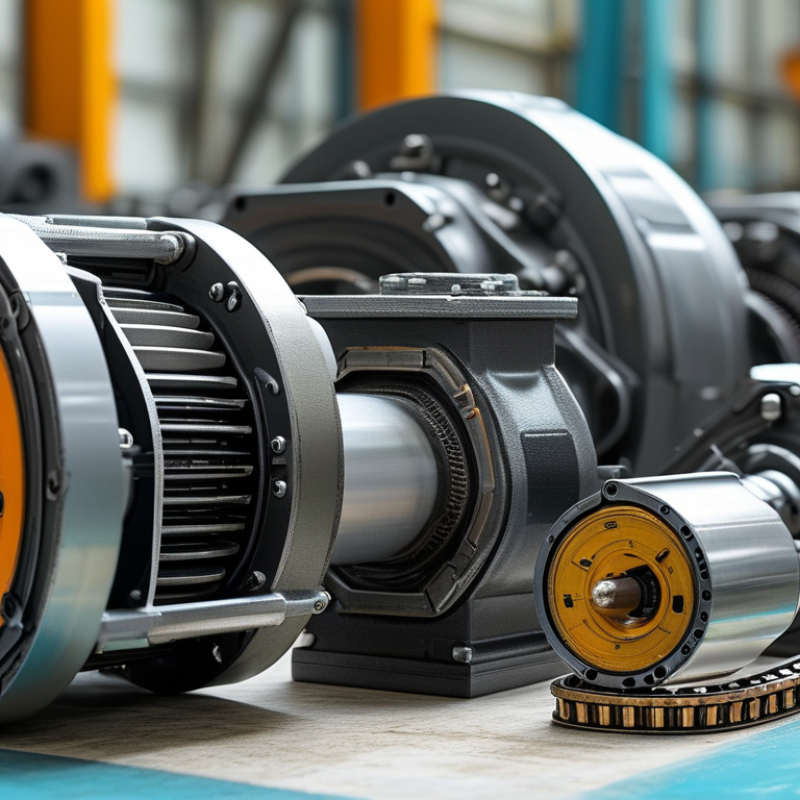
Power Transmission Product Categories in 2026
Power transmission products in 2026 cover several connected categories. Gear drives remain essential for high-torque equipment and controlled speed reduction. Helical, bevel, planetary, and worm designs serve different load conditions. Engineers should match torque, duty cycle, mounting space, and service temperature.
Belts and pulleys support quiet, economical power transfer. Synchronous belts improve timing accuracy, while variable-speed belts help machines adjust output. Chains remain useful in conveyors, agricultural equipment, and harsh industrial environments. Correct lubrication matters. Poor alignment can shorten chain life quickly.
Bearings reduce friction between rotating parts and support shafts under changing loads. Couplings connect shafts while managing small misalignments and vibration. Linear motion products, including ball screws, roller guides, and rack systems, support automated positioning. Electric motors, variable-frequency drives, sensors, and digital monitoring now work more closely with these mechanical products. A sensor may detect rising vibration before a failure becomes visible. Useful data, but not perfect.
Material selection is becoming more specific. Stainless steel suits corrosive areas, while engineered polymers can reduce weight and noise. Sealed components help in dusty workplaces. However, “maintenance-free” is often an overstatement. Even advanced products require inspection, correct installation, and documented operating limits. A practical review should examine energy use, replacement access, safety guarding, and total lifecycle cost. The cheapest component may create expensive downtime later.
Mechanical power transmission systems move torque from a motor to a working machine. In 2026, gear drives, belt drives, chain drives, and flexible couplings remain widely used. Gear drives suit compact equipment requiring high torque and accurate speed control. Belt drives reduce vibration and operate quietly. Chain drives handle heavier loads, especially where slip must be avoided. Flexible couplings connect shafts while absorbing minor alignment errors.
The main components include shafts, bearings, gears, pulleys, sprockets, belts, chains, seals, and protective guards. Each part affects system efficiency and service life.
A worn bearing can increase heat within minutes. A loose belt may create uneven movement and damage nearby components. Modern systems increasingly use sensors to monitor temperature, vibration, and lubricant condition.
These details help maintenance teams identify problems before production stops.
Selection should begin with torque, speed, duty cycle, space, and environmental conditions. Dust, moisture, heat, and frequent starts can change the best choice. I have found that installation quality often matters as much as product specifications. Even a precisely machined shaft can fail after poor alignment. That assumption is easy to miss. Engineers should also inspect lubrication access and replacement procedures. No design is perfect. A quieter drive may cost more, while a compact drive may offer less tolerance for overload.
What Are the 2026 Top Types of Power Transmission Products?
Modern grids need equipment that moves electricity farther, faster, and with fewer losses. The International Energy Agency’s Electricity 2024 report expects global electricity demand to grow by about 3.2% annually through 2026. This growth increases demand for power transformers, high-voltage switchgear, circuit breakers, and advanced protection systems.
Power transformers remain central to grid expansion. They raise voltage for long-distance transmission and reduce it near industrial and residential loads. High-voltage alternating-current lines still dominate, but high-voltage direct-current systems are gaining importance for offshore wind and remote renewable projects. The IEA’s Electricity Grids and Secure Energy Transitions report estimates that more than 80 million kilometers of grids must be added or refurbished by 2040. That requirement supports stronger demand for conductors, underground cables, towers, and converter stations.
Digital substations will also matter in 2026. Sensors, automated protection relays, and real-time monitoring can identify overheating before insulation fails. Flexible AC transmission equipment helps control voltage during unstable renewable generation. Practical planning remains difficult. A technically advanced product may still fail if maintenance skills, spare parts, or local weather data are missing. That weakness deserves more attention. IRENA’s Renewable Capacity Statistics 2025 recorded 585 gigawatts of new renewable capacity in 2024, making grid flexibility increasingly urgent.
Representative voltage classes used by major electrical power transmission equipment in modern grids.
The chart compares representative transmission voltage ratings rather than market share. AC transmission equipment commonly operates around 400–420 kV, while modern HVDC systems can reach approximately 800 kV. Values reflect widely used international transmission voltage classes referenced in IEC standards and industry practice.
What Are the 2026 Top Types of Power Transmission Products?
Digital and Smart Power Transmission Technologies
In 2026, top power transmission products will be defined by intelligence, not steel alone. Smart gearboxes, connected bearings, sensor-ready couplings, and digital variable-speed drives will support clearer machine decisions. Embedded temperature, vibration, torque, and oil sensors can report small changes before a conveyor stops. Edge gateways process these signals near the equipment, reducing delays when factory networks become busy. This is practical experience. A two-degree temperature rise may deserve attention, but not immediate replacement.
Digital twins will improve how engineers select and operate transmission systems. A virtual model can compare load cycles, alignment errors, lubrication conditions, and energy use. Maintenance teams can view a bearing’s trend on a tablet beside the machine. They can schedule inspection during a planned pause instead of reacting to a midnight failure. Secure access controls, encrypted data, and clear audit records matter as much as accurate sensors. Smart products still need qualified installation and regular calibration. Otherwise, precise dashboards may display unreliable conclusions.
The strongest 2026 designs will combine efficient mechanics with open digital communication. High-efficiency drives can adjust speed to real demand, while connected chains and actuators reveal wear patterns. Modular sensors make upgrades easier for older equipment, though compatibility is not always simple. A low-cost sensor may drift over time. Software may also encourage false confidence. Engineers should verify alerts against noise, operating history, and physical inspection. That human check remains essential in dusty plants, wet rooms, and high-load applications. Smart transmission is promising, but its value depends on honest data and disciplined decisions.
| Priority | Power Transmission Product Type | Primary Function | Typical Voltage or Power Range | Digital and Smart Technologies | Key Performance Indicators | Typical Applications | 2026 Technology Direction |
|---|---|---|---|---|---|---|---|
| Top Tier | Digital Power Transformers | Transfer electrical energy between voltage levels while providing insulation, protection, and system monitoring. | Distribution: approximately 1 kV to 36 kV Transmission: above 36 kV |
Online temperature, dissolved-gas, bushing, moisture, load, and partial-discharge monitoring; IEC 61850 communication; digital twin and asset-health analytics. | Transformer efficiency, load factor, winding temperature, insulation condition, dissolved-gas levels, and expected service life. | Utility substations, renewable-energy interconnections, data centers, industrial plants, and urban distribution networks. | More condition-based maintenance, remote diagnostics, compact sensors, and integration with substation automation platforms. |
| Top Tier | Smart Switchgear and Digital Substations | Control, isolate, protect, and route electrical power during normal operation and fault conditions. | Low-voltage systems up to 1 kV; medium-voltage systems commonly from 1 kV to 36 kV; high-voltage systems above 36 kV. | Intelligent electronic devices, process-bus communication, arc-flash detection, remote switching, event recording, and predictive maintenance. | Interrupting capacity, insulation level, operating speed, protection selectivity, arc-fault response, and communication availability. | Transmission substations, renewable-energy plants, industrial facilities, rail systems, commercial buildings, and critical infrastructure. | Greater use of sensor-rich equipment, automated fault isolation, cybersecurity controls, and reduced-cabling process-bus architectures. |
| Top Tier | High-Voltage Direct-Current (HVDC) Converter Systems | Convert alternating current to direct current and back again for efficient long-distance or subsea power transmission. | Commonly used for several hundred kilovolts and above; project ratings range from hundreds of megawatts to multiple gigawatts. | Real-time converter control, wide-area measurement, digital protection, harmonic monitoring, and coordinated grid-control software. | Transmission losses, conversion efficiency, reactive-power support, fault-clearing time, harmonic distortion, and power-transfer capacity. | Offshore wind connections, long-distance bulk transmission, asynchronous grid interconnections, and subsea cables. | Expansion of voltage-source converter technology, stronger grid-forming capability, and improved integration of variable renewable generation. |
| High | Variable-Frequency Drives and Medium-Voltage Drives | Control motor speed, torque, acceleration, and braking by adjusting voltage and frequency. | From fractional-kilowatt equipment to multi-megawatt industrial drives; medium-voltage drives commonly operate from approximately 1 kV to 15 kV. | Embedded sensors, edge analytics, remote parameter management, energy monitoring, fault prediction, and integration with industrial automation systems. | Motor efficiency, speed accuracy, total harmonic distortion, overload capability, energy savings, and drive availability. | Pumps, fans, compressors, conveyors, water treatment, mining, manufacturing, and process industries. | Wider adoption of regenerative braking, active front ends, silicon-carbide power devices, and software-based energy optimization. |
| High | Servo Drives and Precision Motion Systems | Provide highly accurate control of position, speed, and torque for automated mechanical movement. | Typically from tens of watts to several hundred kilowatts, depending on the machine and axis requirements. | Ethernet-based motion control, encoder feedback, vibration monitoring, automatic tuning, digital commissioning, and predictive maintenance. | Positioning accuracy, torque response, speed stability, cycle time, thermal performance, and synchronization accuracy. | Robotics, packaging, semiconductor equipment, machine tools, battery manufacturing, and automated material handling. | More coordinated multi-axis control, energy recovery, artificial-intelligence-assisted tuning, and condition monitoring at the edge. |
| High | Smart Motors, Geared Motors, and Integrated Drive Units | Convert electrical energy into controlled mechanical power for rotating equipment and machinery. | From small fractional-kilowatt motors to large industrial motors rated at several megawatts. | Embedded temperature, vibration, current, speed, and bearing sensors; wireless condition monitoring; motor-efficiency tracking; and cloud or edge analytics. | Efficiency class, rated torque, operating temperature, vibration level, bearing condition, starting current, and service factor. | Conveyors, HVAC systems, pumps, compressors, material handling, process lines, and warehouse automation. | Growth in integrated motor-drive packages, variable-speed operation, high-efficiency motor designs, and data-driven maintenance. |
| High | Flexible AC Transmission Systems (FACTS) | Control voltage, impedance, and power flow to improve the stability and transfer capability of AC networks. | Used on medium- and high-voltage networks, with ratings ranging from tens of megavars to several hundred megavars. | Fast digital control, synchrophasor inputs, adaptive voltage control, grid-stability analytics, and coordinated reactive-power management. | Voltage regulation, reactive-power range, response time, power-flow control, transient stability, and harmonic performance. | Congested transmission corridors, renewable-energy zones, weak grids, industrial networks, and long-distance AC systems. | Increasing coordination with renewable plants, battery storage, grid-forming converters, and wide-area control systems. |
| High | Power Quality Conditioners and Active Harmonic Filters | Reduce harmonics, voltage fluctuations, reactive-power demand, and other power-quality disturbances. | Commonly deployed from low-voltage commercial systems to medium-voltage industrial networks, with ratings from several kilovars to megavars. | Continuous waveform analysis, automatic compensation, event logging, remote alarms, adaptive filtering, and power-quality reporting. | Total harmonic distortion, power factor, voltage unbalance, flicker, compensation response time, and system availability. | Data centers, semiconductor plants, electric-vehicle charging sites, hospitals, manufacturing, and renewable-energy facilities. | Higher demand caused by power electronics, fast chargers, distributed energy resources, and sensitive digital loads. |
| Emerging | Smart Cables and Cable Monitoring Systems | Transmit electrical power while providing real-time information about thermal loading, insulation condition, and physical integrity. | Low-, medium-, and high-voltage cable systems; underground and subsea applications can operate at transmission-class voltages. | Distributed temperature sensing, partial-discharge monitoring, sheath-current measurement, fiber-optic sensing, and dynamic cable-rating software. | Conductor temperature, ampacity, partial-discharge activity, sheath voltage, thermal reserve, and fault-location accuracy. | Underground transmission, offshore wind, urban substations, industrial sites, tunnels, and subsea interconnections. | More dynamic line-rating capability, digital condition assessment, and improved monitoring of aging underground and subsea assets. |
| Emerging | Grid-Scale Battery Energy Storage Power Conversion Systems | Convert AC and DC power while charging or discharging batteries to support grid flexibility and power balancing. | Individual systems commonly range from hundreds of kilowatts to hundreds of megawatts; storage duration is often approximately 1 to 8 hours. | State-of-charge estimation, state-of-health monitoring, grid-forming control, remote diagnostics, thermal management, and energy-management software. | Round-trip efficiency, response time, usable capacity, state-of-health accuracy, availability, and fault response. | Frequency regulation, renewable-energy smoothing, peak shaving, backup power, black start, and transmission congestion management. | Rapid expansion of grid-forming inverters, hybrid renewable-storage plants, advanced safety monitoring, and coordinated virtual power plants. |
Note: Voltage, power, and performance ranges are representative engineering ranges rather than universal product limits. Actual specifications depend on system design, grid code, insulation coordination, environmental conditions, and applicable standards such as IEC 60076, IEC 62271, IEC 61850, IEC 61439, and IEEE 519.
Choosing power transmission products in 2026 requires more than comparing catalog ratings. Gear drives suit high torque and controlled speed. Timing belts support accurate movement with lower noise. Roller chains handle rugged loads but need regular lubrication. Flexible couplings absorb shaft misalignment and reduce shock. Bearings remain essential where smooth rotation and reduced friction matter.
Compare each option against the actual application. Measure torque, speed, duty cycle, temperature, space, and expected service life. A conveyor moving dusty materials may need sealed bearings and corrosion-resistant components. A packaging machine may favor a timing belt because positioning accuracy matters. Check starting loads, not only average loads. That detail is often missed. Review efficiency too, because small losses become expensive during continuous operation. Technical drawings, load calculations, and maintenance records provide stronger evidence than a simple price comparison.
Installation conditions can change the best choice. An enclosed gearbox may perform well indoors but struggle with heat if ventilation is poor. A chain drive may be dependable, yet tensioning errors can cause noise and premature wear. I have seen durable components fail because alignment was treated as a minor task. That lesson still matters. Ask how quickly parts can be inspected, adjusted, and replaced. Also compare total ownership cost, including lubrication, downtime, energy use, and worker access. A technically excellent product can still be the wrong answer when maintenance is difficult.
: Smart gearboxes, connected bearings, sensor-ready couplings, and digital variable-speed drives will become increasingly important. Steel alone is not enough.
Gear drives suit applications requiring high torque and controlled speed. Check starting loads carefully. Average loads can mislead.
Timing belts suit machines needing accurate movement and relatively low noise. They may fit packaging equipment with repeated positioning tasks.
Roller chains can handle demanding loads and harsh working conditions. They need regular lubrication, correct tension, and periodic inspection.
Temperature, vibration, torque, and oil sensors can reveal developing problems. A two-degree temperature rise deserves attention, not instant replacement.
A digital twin compares load cycles, alignment errors, lubrication, and energy use. It can support maintenance planning during scheduled pauses.
Sensor data may drift, become noisy, or create false confidence. Inspect the physical equipment too. Dashboards are not perfect.
Compare torque, speed, duty cycle, temperature, space, and expected service life. Include starting loads, energy use, and maintenance access.
Poor alignment, weak ventilation, incorrect tension, and difficult access can shorten service life. A durable component can still fail. That lesson matters.
Purchase price shows only part of the expense. Include lubrication, downtime, energy consumption, inspections, and replacement labor.
In 2026, Power Transmission Products will cover a broad range of solutions designed to move mechanical energy, electrical power, and digital control signals efficiently and reliably. Mechanical power transmission systems will continue to rely on essential components such as gears, belts, chains, couplings, bearings, shafts, and speed reducers. At the same time, electrical power transmission equipment—including transformers, switchgear, transmission lines, substations, and protection devices—will support modern grids with greater capacity, stability, and energy efficiency.
Digital and smart technologies will further transform power transmission through sensors, automation, remote monitoring, predictive maintenance, and data-based control systems. These tools can help operators identify faults, reduce downtime, and improve system performance. When comparing products for different applications, users should consider load requirements, operating speed, voltage level, environmental conditions, installation space, maintenance needs, safety, scalability, and total lifecycle cost. Selecting the right combination of components and intelligent technologies can create a transmission system that is dependable, efficient, and prepared for future operational demands.
