Noco tech Motor
Buying the best Asynchronous Motor in China is not simply a matter of finding the lowest price. The right choice depends on the load, duty cycle, supply voltage, installation conditions, and maintenance plan. A motor driving a water pump has different demands from one running a conveyor through long shifts. Small details matter.
Dr. H. A. Toliyat, an electrical-machines researcher and professor, has emphasized the importance of matching motor design to its application. A practical paraphrase of that principle is: “Choose the motor for the real load and operating conditions, not just its nameplate.” This is a paraphrase, not a verbatim quotation. It captures a useful point for buyers comparing Chinese manufacturers: specifications need to fit the job.
This guide explores how to assess suppliers, compare efficiency and protection ratings, and review test documentation before placing an order. Ask about winding materials, bearing options, production checks, warranty terms, and spare-parts availability. Request clear answers, not only polished catalog pages. Where possible, review inspection records and confirm that the offered model matches the actual application. A low quotation can still leave questions about service or consistency. That deserves a second look. No checklist removes every risk, but careful verification makes supplier comparisons more reliable.
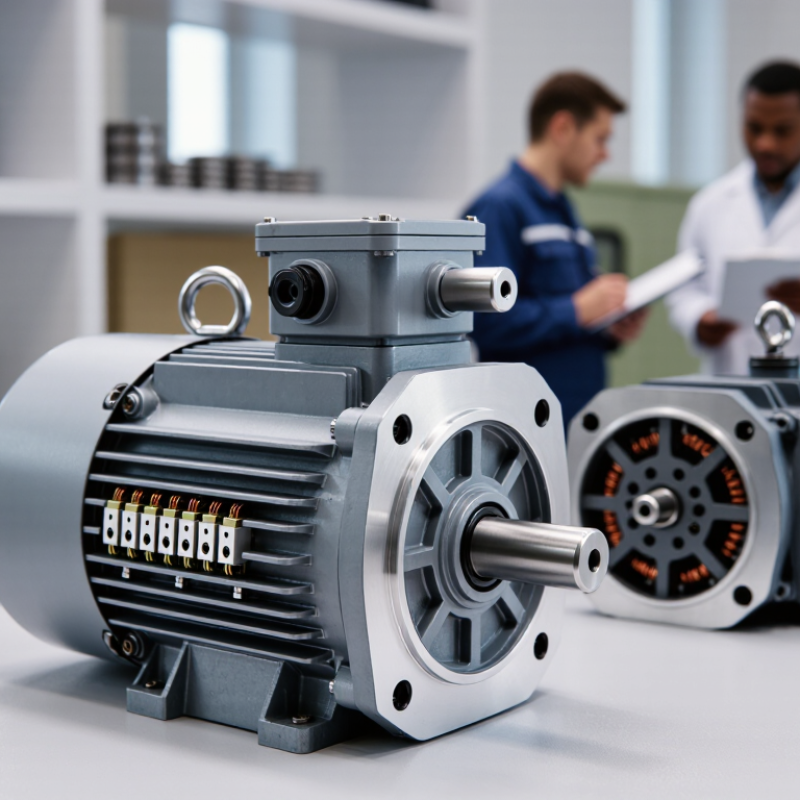
Where to Buy the Best Asynchronous Motor in China?
Three-phase asynchronous motors are commonly designed for 50 Hz power supplies. Their pole count affects speed: a two-pole motor runs at about 3,000 rpm, while four, six, and eight poles run near 1,500, 1,000, and 750 rpm. These are synchronous speeds. Under load, rotor speed is slightly lower because of slip. That difference matters. A fan, conveyor, and pump may need very different operating speeds and torque.
Tips: Confirm the supply voltage, frequency, pole count, mounting style, and duty rating before ordering. Ask for a test report and rated-speed data. Compare these details with your equipment requirements, not just the quoted price.
When sourcing in China, request clear specifications and check how the supplier verifies insulation, vibration, and temperature rise. A motor that looks suitable on paper may perform differently with a heavy starting load or poor ventilation. It is worth asking for operating curves and clarification on efficiency ratings. One detail is easy to overlook: a 50 Hz motor may not suit a 60 Hz installation without checking its design and load conditions.
When comparing asynchronous motors in China, begin with the actual load, not the largest kilowatt figure on a quotation. Rated power should match the machine’s continuous demand, starting conditions, and available supply. A conveyor carrying steady loads may need a different selection from a mixer that starts full. Check the nameplate. Ask for rated voltage, frequency, speed, and current, then compare them with your site conditions.
Duty type matters just as much. S1 indicates continuous operation at a steady load; intermittent starts or changing loads may require another duty rating. Request the duty designation and operating limits in writing. A motor that looks suitable on paper can run hot if its real operating cycle differs from the stated one. I have seen buyers focus on purchase price and overlook this detail. It is an easy mistake to make.
For efficiency, compare IE classes under IEC 60034-30-1, while confirming the motor falls within the standard’s scope. A higher class can reduce energy use during long operating hours, but the benefit depends on load and electricity costs. Ask for test documentation, not just a sales claim. Check whether the stated class applies at the quoted power, poles, and frequency. Small inconsistencies deserve a closer look. A clear datasheet and consistent test records make supplier comparisons more reliable.
Compare motor specifications against your application and request test data for the exact model offered. The efficiency figures below are IEC minimum efficiency values for three-phase, four-pole, 50 Hz motors at the listed rated outputs; they are class thresholds, not guaranteed test results for a particular motor.
| Rated output | Typical application | Reference supply and speed | Duty type to specify | IE2 minimum efficiency | IE3 minimum efficiency | Checks when sourcing |
|---|---|---|---|---|---|---|
| 0.75 kW | Small pumps, fans, and light-duty machinery | Three-phase, 380–415 V, 50 Hz; 4 poles; synchronous speed 1,500 r/min | S1 for continuous operation; specify the actual load cycle if operation is intermittent | 79.6% | 82.5% | Confirm starting method, mounting arrangement, shaft dimensions, and whether the load needs a service factor. |
| 1.5 kW | Small compressors, conveyors, and process pumps | Three-phase, 380–415 V, 50 Hz; 4 poles; synchronous speed 1,500 r/min | S1 is a common selection for steady operation; check starts per hour and load variation | 82.8% | 85.3% | Check overload requirements, ambient temperature, cooling method, and the motor’s nameplate rating. |
| 3 kW | General-purpose pumps, fans, and production equipment | Three-phase, 380–415 V, 50 Hz; 4 poles; synchronous speed 1,500 r/min | S1 for continuous duty; consider a suitable variable-speed drive if speed control is required | 85.5% | 87.7% | Confirm drive compatibility, insulation requirements, protection rating, and whether a brake is needed. |
| 7.5 kW | Industrial fans, pumps, mixers, and medium-duty conveyors | Three-phase, 380–415 V, 50 Hz; 4 poles; synchronous speed 1,500 r/min | S1 for sustained operation; provide the supplier with the load profile and starting conditions | 89.1% | 90.4% | Verify full-load current, starting current, enclosure protection, noise limits, and local installation requirements. |
| 15 kW | Large pumps, compressors, and continuous-process machinery | Three-phase, 380–415 V, 50 Hz; 4 poles; synchronous speed 1,500 r/min | S1 where the motor runs continuously; assess thermal limits for frequent starts or variable loads | 91.2% | 92.1% | Request a certified efficiency test report, confirm coupling and foundation details, and assess total lifecycle energy cost. |
Duty and efficiency note: S1 denotes continuous running duty. IEC 60034-30-1 efficiency classes apply only to motors within the standard’s scope; eligible duty ratings include S1 and certain S3 or S6 ratings with a cyclic duration factor of at least 80%. Efficiency thresholds vary with rated output, pole count, and supply frequency, so do not compare figures across different motor configurations as if they were equivalent.
When requesting quotations, specify rated output, voltage, frequency, number of poles, duty type, mounting, protection rating, and required IE class. Ask for the exact model’s nameplate details and test documentation.
China offers several practical routes for sourcing an asynchronous motor, but each calls for different checks. OEM factories can discuss winding design, shaft dimensions, mounting type, and operating conditions directly. Send a clear specification sheet, including voltage, frequency, rated power, duty cycle, and required protection level. Ask for a drawing and a test report before approving production. A factory visit can reveal how motors are assembled and tested. Look closely at the nameplate, terminal box, and finish. Details matter.
Authorized distributors may suit buyers who need smaller quantities, local stock, or support after delivery. Confirm their authorization with the manufacturer, and ask how warranty claims and replacement parts are handled. Check that the motor’s serial information matches its documents. A quick reply is useful, but it is not proof of technical support. I would not rely on a sales promise alone; written terms make a difference.
Online marketplaces make it easy to compare specifications and request quotations from multiple suppliers. Still, polished photos do not confirm motor performance. Request a datasheet, efficiency information, dimensional drawings, and a sample inspection where practical. Compare the exact model codes, not just the listed power. Marketplace listings can be incomplete, and I have to admit that even a careful comparison may miss a detail. A short video call with the supplier’s engineer can help clarify unclear points.
Compare the IEC efficiency classes when evaluating motors from OEM factories, authorized distributors, or online marketplaces.
The chart shows IEC 60034-30-1 efficiency thresholds for a 1.5 kW, four-pole motor: IE1 84.1%, IE2 85.3%, IE3 86.5%, and IE4 88.2%. These are standard-class thresholds, not measured results for a particular product. When sourcing, ask for the motor nameplate and test documentation, and confirm that the rated power, pole count, frequency, and efficiency class match your application.
When comparing Chinese suppliers, check compliance before comparing price. GB 18613-2020 sets energy-efficiency requirements for specified motors rated from 0.12 to 1,000 kW. Confirm that the motor’s type, voltage, frequency, pole count, and duty match the standard’s scope. A similar-looking rating is not enough. Ask the supplier to state the applicable efficiency grade and provide supporting test documentation for the exact model.
Check the nameplate against the quotation and technical sheet. Rated output, speed, voltage, and efficiency should agree across all three. Request a test report from a qualified laboratory, and confirm its model details match the motor being offered. If the application runs under variable load, ask how operating conditions affect expected efficiency; a catalogue figure alone may not predict real-world use. Small discrepancies matter.
Tips: Compare like with like. Save the report, nameplate photo, and written grade declaration with your purchase records. If a supplier gives only a broad efficiency claim, ask for the standard clause or test evidence. I would still review installation and load assumptions carefully; paperwork can be correct while the motor is poorly matched to the job.
When deciding where to buy an asynchronous motor in China, compare suppliers through verifiable evidence, not polished catalog pages. Request a test report for the motor model and rating you plan to order. Check whether it lists voltage, current, efficiency, temperature rise, and test conditions. Confirm that the report matches the nameplate and production specification. A clear document should be easy to verify. Small details matter.
Read the warranty before comparing prices. Check its duration, covered components, and process for handling a failure. Ask who pays for replacement parts and freight, and whether troubleshooting is available remotely. A long warranty sounds reassuring, but unclear exclusions can weaken it. Ask for written terms. Note any unanswered questions.
Lead time should include production, inspection, packing, and transport preparation. Request a dated schedule and ask how delays are communicated. Then check service coverage: where technicians or spare parts are available, and how quickly support typically responds. If your installation is far from major service centers, response time deserves extra weight. One imperfect detail: supplier estimates can change when specifications change, so keep the final motor requirements in writing and compare quotations on the same basis.
Match it to the machine’s continuous demand, starting conditions, and available supply. A steady conveyor and a fully loaded mixer may need different ratings.
Compare rated voltage, frequency, speed, and current with your site conditions. Check the exact model, too.
S1 indicates continuous operation at a steady load. Changing loads or frequent starts may need another duty rating.
Its real operating cycle may differ from the stated duty type. I still find this easy to overlook.
Compare classes under IEC 60034-30-1, and confirm the motor falls within the standard’s scope. Check the quoted power, pole count, and frequency.
Request test documentation and compare it with the datasheet. Small inconsistencies deserve a closer look.
Send clear requirements, including voltage, power, duty cycle, and protection level. Request a dimensional drawing and test report before production.
Confirm distributor authorization and written warranty terms. For marketplace listings, compare exact model codes and request drawings or a sample inspection where practical.
No. Photos can show the finish, but not prove test results. A short call with an engineer may clarify missing details.
Choosing the best Asynchronous Motor in China starts with matching the motor to the power supply and application. For many industrial systems, this means confirming compatibility with a 50 Hz, three-phase supply and selecting the appropriate speed range, commonly associated with 2–8 poles. Compare rated power, operating duty, and efficiency class under IEC 60034-30-1, while checking that the motor’s performance suits its expected load and operating conditions.
Buyers can consider OEM factories, authorized distributors, and online marketplaces, then evaluate each supplier using consistent criteria. Request relevant test reports, confirm warranty terms and production lead times, and assess service coverage for installation support and future maintenance. Also verify that the motor meets applicable GB 18613-2020 efficiency requirements for its rated power range, including motors from 0.12 to 1,000 kW. Careful checks of specifications and documentation help reduce purchasing risks and identify a dependable source.
