Noco tech Motor
1. Executive Summary: The Frontier of Micro-Drive Engineering
In the modern era of high-precision mechanics, the demand for compact, efficient, and highly responsive actuators has skyrocketed. Industry 4.0, advanced medical robotics, aerospace, and high-frequency automation all demand motion systems that can start, stop, and accelerate with minimal latency. Traditional iron-core DC motors, with their inherent rotor inertia and cogging torque, often fall short of meeting the rigorous demands of sub-millisecond precision.
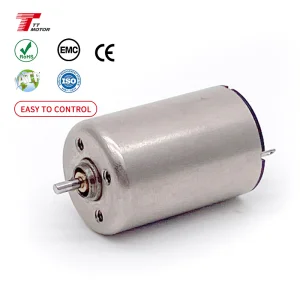
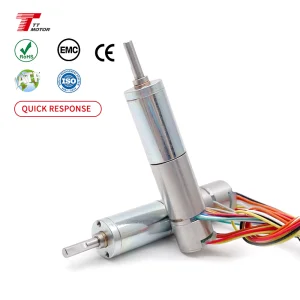
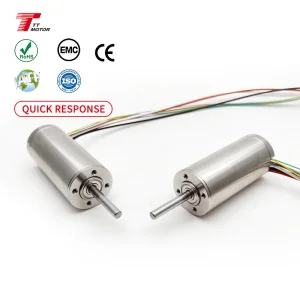
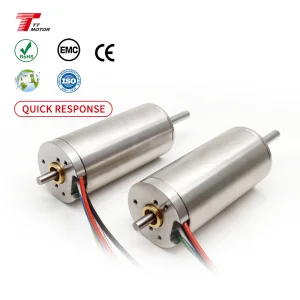
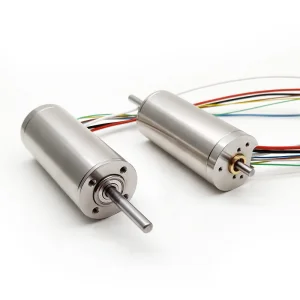
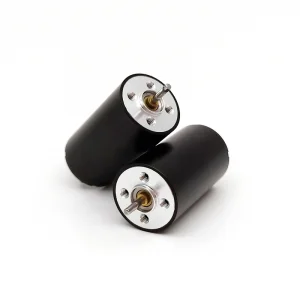
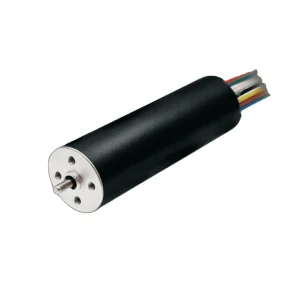
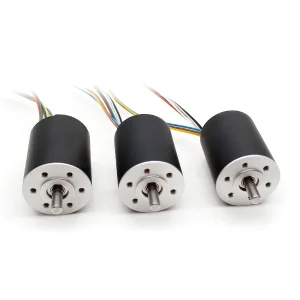
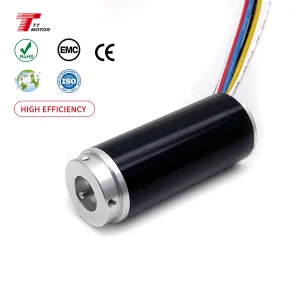
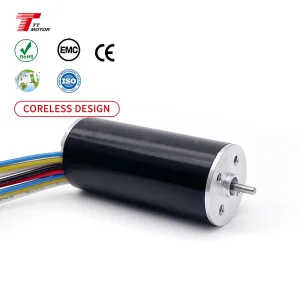
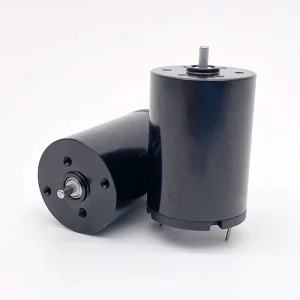
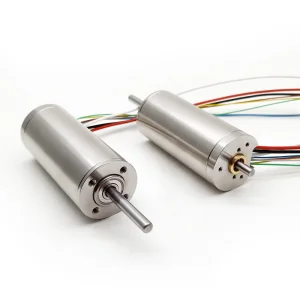
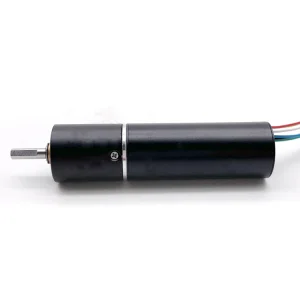
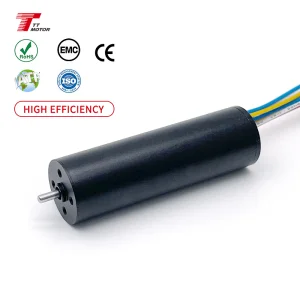
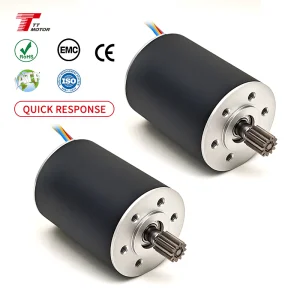
This is where DC Coreless Motors (also known as slotless motors) prove their superiority. By eliminating the heavy laminated steel core from the rotor, these motors offer a radically low moment of inertia, exceptional power-to-weight ratios, and smooth, cogging-free rotation.
As a premier global exporter collaborating directly with system integrators, distributors, and R&D labs in New York and globally, our goal is to supply high-end micro-drives designed to optimize machine footprints and increase energy efficiency. Whether you are engineering surgical tools in Manhattan or deploying drone technologies in Upstate New York, our technical expertise ensures your motion designs operate at peak capacity.
“By stripping away the iron core, we eliminate core losses and magnetic sticking. The result is an ultra-responsive, highly efficient drive system that unlocks unprecedented control resolution for complex automation tasks.”
2. Technical Breakdown: Coreless vs. Traditional Iron-Core Topologies
To appreciate the engineering advantages of a DC coreless motor, one must analyze its internal physics. In a traditional DC motor, copper wires are wound around a slotted iron core. While this design provides a robust structure, it introduces several significant drawbacks:
- Cogging Torque (Magnetic Sticking): The rotor’s iron teeth naturally align with the stator’s permanent magnets, causing an uneven rotational feel, especially at low speeds. This prevents smooth micro-stepping.
- Rotor Inertia: Iron is dense and heavy. Moving it requires a significant initial energy burst, reducing the acceleration rate and dynamic bandwidth of the system.
- Iron Losses (Eddy Currents): As the rotor spins through the magnetic field, eddy currents are generated within the iron laminations, producing heat and lowering total system efficiency.
In contrast, a coreless motor uses a self-supporting, basket-weave copper coil that spins directly around a central static magnet. Without an iron rotor, there is no magnetic attraction between the stator and the rotor at rest, meaning zero cogging torque. The coil's lightweight nature translates to an extremely low mechanical time constant, allowing the motor to reach speeds of up to 40,000 RPM in milliseconds.
| Performance Metric | Standard Iron-Core Motor | High-Performance Coreless Motor | System Benefit |
|---|---|---|---|
| Cogging Torque | Present (magnetic sticking) | None (smooth rotation) | Exceptional positional accuracy and slow-speed stability. |
| Mechanical Time Constant | 15ms – 30ms | < 5ms (as low as 1ms) | Ultra-fast acceleration, deceleration, and direction reversal. |
| Rotor Inertia | High | Very Low | Reduced power consumption during start-stop cycles. |
| Electrical Noise / EMI | Moderate to High | Minimal | Ideal for sensitive medical and measurement devices. |
| Power-to-Volume Ratio | Standard | Extremely High | Allows space-saving designs in miniature applications. |
3. The New York Industrial Context: Demand for Ultra-Precision Micro-Drives
New York is a critical hub for high-tech manufacturing, advanced medical laboratories, and aerospace innovation. According to regional economic data, the Upstate NY corridor (including Rochester and Syracuse) maintains an established cluster of optics, photonics, and precision imaging companies. Downstate, including Long Island and the Brooklyn Navy Yard, has emerged as a fertile ground for biotech startups, advanced robotic research, and drone engineering firms.
These industries operate under strict quality and space limitations. A medical device startup in Long Island City, for instance, developing a handheld micro-infusion pump, cannot afford the bulk or heat generation of standard motors. In these scenarios, a 16mm or 22mm DC coreless motor provides the necessary mechanical torque while fitting neatly within ergonomic hand grips.
Similarly, local NY aerospace and UAV (Unmanned Aerial Vehicle) enterprises require motors with low electrical interference and high thermal stability to ensure precise control loop feedback under varying ambient temperatures. By sourcing high-performance coreless drives directly from an ISO9001-certified factory, local developers can minimize their time-to-market and secure a competitive advantage in hardware performance.